Black Friday massacre: Pahlavi regime’s textbook tyranny that paved way to Islamic Revolution
By Yousef Ramazani
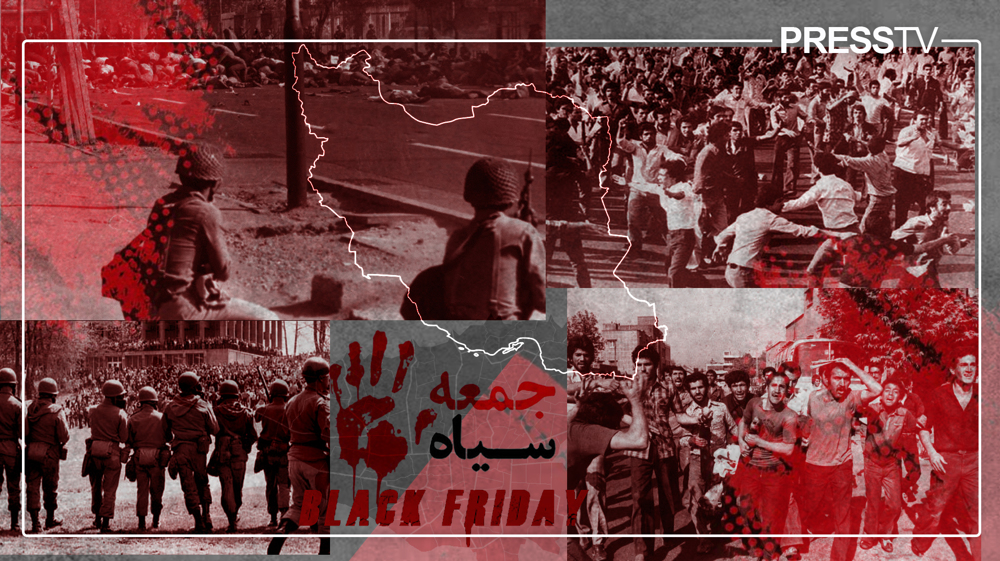
This day, forty-seven years ago, the Pahlavi regime committed one of the most heinous crimes in Iran's modern history, brutally massacring unarmed demonstrators in Tehran’s Jaleh Square.
The cold-blooded massacre revealed the West-backed regime's brutal nature and accelerated its demise and the inevitable victory of the Islamic Revolution months later.
Known as Black Friday, it marked a turning point, where the people's peaceful movement for justice was met with unbridled violence, shattering any remaining illusions about the possibility of reform within the monarchical system and proving that the only path to freedom was its complete overthrow.
The sheer brutality of the Pahlavi regime served to unite the nation further under the visionary leadership of Imam Khomeini, transforming a popular and widespread movement into an unstoppable revolutionary force that would forever alter the destiny of Iran.
Path to tyranny
The events leading to the massacre of 17 Shahrivar were characterized by the Pahlavi regime's desperate attempts to maintain its illegitimate power through deception and false promises, strategies that only strengthened the people's resolve.
Following widespread popular uprisings inspired by Imam Khomeini's leadership, the panicked Mohammad Reza Pahlavi dismissed the regime of Jamshid Amouzegar and appointed Jafar Sharif-Emami as prime minister under the fraudulent banner of a "Government of National Reconciliation."
This regime, which Imam Khomeini said was based on “deception and trickery," attempted to create a superficial appearance of change by promising dialogue with the clergy and a fight against corruption, but in reality sought to placate the protesters without addressing any of their fundamental demands.
The regime's sinister plans coincided with the holy month of Ramadan, a period during which revolutionary clerics and preachers powerfully exposed the regime's oppression and faithfully conveyed the messages of Imam Khomeini and the religious authorities to the people.

The massive Eid al-Fitr prayer gathering on 13 Shahrivar 1357, led by the martyr Ayatollah Mohammad Mofatteh on the Qeytariyeh hills of Tehran, culminated in a huge peaceful demonstration that served as a powerful show of force and a clear rejection of the Pahlavi dictatorship, proving that the people could no longer be deceived by empty words and theatrical gestures.
Realizing that its strategy of deception had failed utterly, the regime resorted to its ultimate tool of oppression, secretly planning a violent crackdown reminiscent of its bloody suppression of the 5 June 1963 (15 Khordad 1342 SH) uprising, setting the stage for a horrific confrontation.
In a treacherous move, martial law was declared for Tehran and eleven other cities in the middle of the night on 7 September (16 Shahrivar) – a declaration many citizens were unaware of as they gathered for a planned demonstration, unknowingly walking into a carefully laid trap.
Massacre at Jaleh Square
The morning of September 8, 1978, witnessed a horrific crime that forever stained the Pahlavi regime with the blood of innocent martyrs and exposed its savage nature to the world.
A large and peaceful crowd of men, women, and youth, filled with revolutionary spirit, gathered in Jaleh Square in response to calls for protest, completely unaware that the regime had declared martial law and surrounded the area with military forces prepared for a massacre.
Pahlavi regime agents repeatedly announced over loudspeakers for people to leave the square, while military officers took positions in the northeastern part of the square and helicopters hovered ominously overhead, creating an atmosphere of intimidation and fear.
When the regime's forces saw the square filled with determined people refusing to disperse, they opened fire directly on the unarmed crowd, committing an unspeakable act of violence against their own citizens.
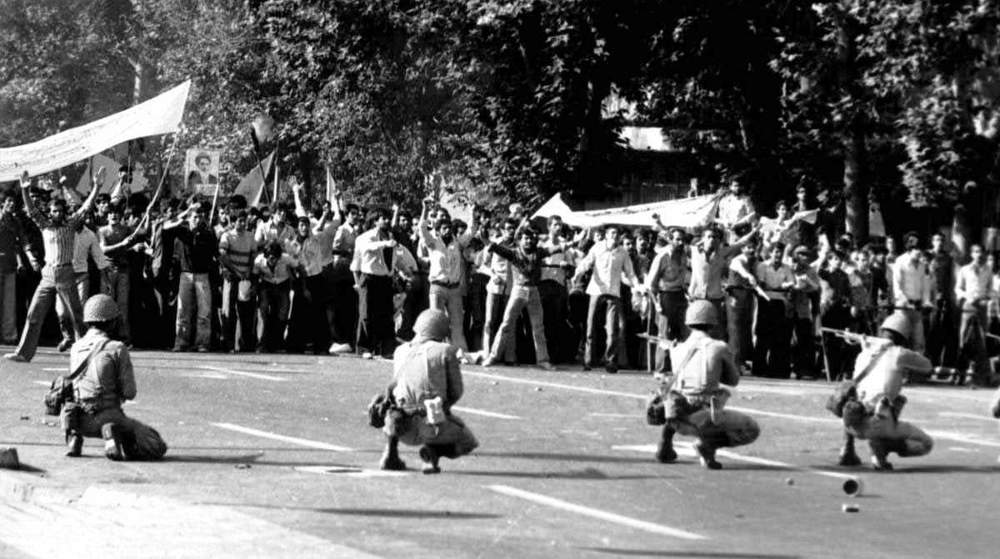
In a breathtaking display of courage and sacrifice, revolutionary women used their own bodies as shields to protect the men from the hail of bullets, embodying the highest values of martyrdom and resistance that would come to define the Islamic Revolution.
The shooting, however, continued mercilessly, resulting in a large number of martyrs and wounded, with many of the injured smuggled away by their comrades to avoid arrest and torture by SAVAK, the regime's hated secret military apparatus.
The exact number of martyrs remains unknown because the regime's forces seized the bodies of the victims to conceal the true scale of their crime, though estimates from sources suggest hundreds were martyred that day, a figure starkly contrasting the regime's fabricated and minimized reports.
This act of sheer brutality, ordered by the highest levels of the Pahlavi regime with the full support of its American masters, was intended to terrorize the population into submission but instead ignited an unquenchable fire of resistance that would ultimately consume the monarchy itself.
Fueling the revolutionary fire
The immediate and long-term consequences of the Black Friday massacre were profound, ending the reign of the Pahlavi regime and galvanizing the nation toward its final victory under the banner of Islam.
The bloody events completely exposed the true nature of Sharif-Emami's so-called "Government of National Reconciliation," revealing it to be nothing more than a cruel facade for the same oppressive regime, thereby destroying any public trust in political reform from within the system.
International reactions, particularly from Western governments and media, were telling. Some outlets, like The Guardian, predicted that the regime's bloody actions would lead to its isolation and downfall, while others continued to express support for the Shah, highlighting their complicity in his crimes.

Imam Khomeini, from his exile, immediately recognized the transformative nature of the event, issuing a powerful message praising the martyrs and assuring the nation that victory was certain, a message that tremendously boosted the morale of the revolutionaries and unified the movement.
The massacre marked the beginning of a new phase of struggle, leading to Imam Khomeini's relocation from Iraq to Paris, where he could more effectively utilize international media to expose the regime's crimes and guide the revolution to its culmination.
Within Iran, the movement intensified dramatically, with the subsequent months of Muharram and Safar witnessing even larger demonstrations and mourning ceremonies that further mobilized the masses and eroded the regime's control, culminating in the historic Tasu'a and Ashura marches.
The failure of subsequent military governments and American-backed conspiracies, including proposed coups and assassination plots against Imam Khomeini, demonstrated that the people's faith and unity had become an unstoppable force that no amount of foreign-backed violence could suppress.
The ultimate victory of the Islamic Revolution on 22 Bahman 1357 (11 February 1979) stands as an eternal testament to the sacrifices made on Black Friday, proving that the blood of the martyrs is indeed more powerful than the tyranny of the oppressors, and establishing a divine system that continues to defy global arrogance.
Israel’s unprecedented atrocities have dealt most devastating blows to UN’s credibility: Tehran
Grand Ayatollah Shobeiri Zanjani passes away at age of 98
Iran must fight US blockade with energy blockade: Deputy speaker



US aggression, economic warfare amount to crimes against humanity: Iran's UN envoy
Protests erupt in US as ICE agent shoots Venezuelan driver
US pressure fuels cooperation among Muslim states: Pezeshkian
Major TV networks suspend White House pool coverage after Trump ban
US visa ban on Palestinian UN delegation violates international agreements: Hamas
VIDEO | Press TV's news headlines
Iran calls on France to respect law after suspending French cultural institute in Tehran
Israel lobby no longer shy about its grip on US policy on Iran: Araghchi


 PressTV NEWSLETTER
now
PressTV NEWSLETTER
now
 This makes it easy to access the Press TV website
