Explainer: What’s the most likely scenario as E3 moves to ‘snap back’ Iran sanctions
By Hamid Javadi
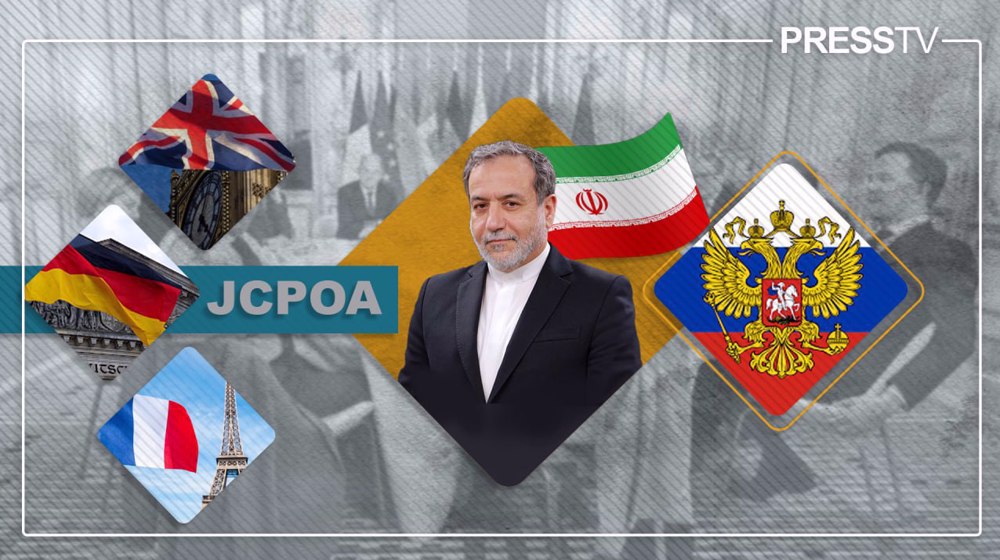
France, Germany, and the United Kingdom, the three European parties to the 2015 nuclear agreement with Iran (known as the E3) say they are edging closer to invoking the “snapback mechanism” and re-imposing UN sanctions against the country.
Iran has warned of consequences if the snapback sanctions are reinstated, as European diplomats signaled the process could begin as early as Thursday.
US Secretary of State Marco Rubio, whose country is no longer a party to the nuclear deal, told his E3 counterparts on Wednesday that the snapback clause is “a very powerful piece of leverage” they can use against Tehran.
What’s the snapback provision?
The snapback provision, included in UN Security Council Resolution 2231, allows signatories of the Joint Comprehensive Plan of Action (JCPOA), the now-defunct nuclear deal, to automatically restore UN sanctions, which were lifted in exchange for restrictions on Iran’s nuclear program, if Tehran is found to be in “significant” non-compliance with its obligations.
The move is deemed highly controversial, which could dramatically ratchet up the already boiling tensions surrounding Iran’s peaceful nuclear program.
The Israeli regime could seize the move as an excuse to launch another round of aggression on Iran’s nuclear sites, as it did in June after the UN nuclear watchdog, without evidence, accused Iran of being in breach of its non-proliferation obligations.
Iran once again warns the European troika about activating the so-called snapback mechanism of the JCPOA, saying they lack any legal ground to do so.
— Press TV 🔻 (@PressTV) August 28, 2025
Follow: https://t.co/B3zXG73Jym pic.twitter.com/j8ihk0Ww0R
The United States joined that war by bombing three major enrichment facilities in Iran, derailing ongoing but inconclusive nuclear negotiations between Tehran and Washington.
Those talks, five rounds of which had been mediated by Oman before the war, aimed to find a replacement for the JCPOA, which US President Donald Trump unilaterally walked away from in 2018.
The Europeans, who were central to the original nuclear deal, were largely excluded from the talks between Iran and the US.
They now see the snapback of sanctions as their only leverage to regain their relevance in the process. Iran, however, has warned that triggering the mechanism would forever end Europe’s involvement in the country’s nuclear file.
Relations between Iran and the E3 have markedly deteriorated, even more so since the European powers failed to condemn the Israeli-US attacks on Iranian nuclear facilities under IAEA oversight.
Why is E3 threatening to trigger snapback now?
The window for invoking the snapback mechanism is closing fast. Resolution 2231 that endorses the JCPOA expires on October 18, so does the provision allowing for the automatic restoration of UN sanctions.
The Europeans face an end-of-August deadline if they decide to invoke the snapback, as the process calls for a 30-day notification period under Resolution 2231.
Once notified, the UN Security Council has to pass a resolution within that timeframe to continue lifting sanctions. If no resolution is adopted, either through a veto or inaction, all UN sanctions would automatically “snap back” against Iran.
Reuters reports that the E3 is likely to initiate the activation process of the Snapback mechanism to reimpose UN sanctions on Iran on Thursday.
— Press TV 🔻 (@PressTV) August 27, 2025
Follow Press TV on Telegram: https://t.co/LWoNSpkc2J pic.twitter.com/Yf17put5Kg
IAEA Secretary-General Rafael Grossi said Wednesday that “many things could happen” in a month even if the snapback mechanism is activated.
Grossi acknowledged legislation passed by Iran’s Parliament suspending cooperation with the UN nuclear watchdog in response to the US-Israeli strikes. However, he asserted that “the IAEA and Iran are bound” by the Nuclear Non-Proliferation Treaty (NPT) and the Safeguards Agreement.
How will Iran likely respond?
Iran, however, has threatened to halt all cooperation with the IAEA and potentially withdraw from the NPT if snapback sanctions are reinstated.
The Europeans have long threatened to reimpose the sanctions unless there is significant progress in talks on a new agreement on Iran’s nuclear program.
Iran, for its part, has signaled that while it remains committed to diplomacy, it wants guarantees that it will not again come under unprovoked attack amid talks.
The E3 is also hard-pressed to activate the snapback provision before October because that is when Russia takes over the chair of the Security Council. That could potentially throw a wrench in the process, as Russia will be in a position to set the agenda of the Council and could delay proceedings.
As such, time is running out for the Europeans to decide. While they are aware of the consequences, they do not want to lose the leverage of snapback against Iran.
Iran doesn’t want the sanctions to return. It has been in contact with both the Europeans and its allies, China and Russia, in an attempt to avert that outcome.
Researcher and author Reza Vedadi shares his perspective on the three European countries seeking to trigger the JCPOA’s snapback mechanism against Iran.
— Press TV 🔻 (@PressTV) August 27, 2025
Follow: https://t.co/GKZwI4ehqL pic.twitter.com/Bwqp1BdLvJ
What was the outcome of the latest talks?
On Tuesday, top Iranian diplomats Majid Takht-Ravanchi and Kazem Gharibabadi held talks with European negotiators in Geneva. Gharibabadi posted on X following the talks that it was “high time” for the E3 “to make the right choice and give diplomacy time and space.”
“In this round of negotiations, we made it clear that the Europeans are not in a legal position to trigger the snapback mechanism, and there is no legal basis for their action,” Gharibabadi later said on national TV. “The reality is that the Europeans have not been implementing the JCPOA for years.”
Iran maintains that the E3 lacks the legal authority to use the snapback provision, as they have failed to uphold their commitments under the 2015 nuclear deal, specifically to provide sanctions relief after the US exited the agreement and reimposed sanctions.
Last month, the Europeans offered to extend the October deadline. In return, they requested Iran to resume talks on the status of its uranium stockpile and nuclear activities, account for what the IAEA has claimed are roughly 400 kilograms of highly-enriched uranium, and allow agency inspectors to visit its nuclear facilities, even those that were damaged by US-Israeli strikes.
Gharibabadi said Wednesday that the European diplomats floated the idea again during the talks in Geneva. Iran responded by reminding them that such a decision must be undertaken by the UN Security Council.
“This matter essentially falls under the jurisdiction of the UN Security Council, and it can be pursued within that framework,” Gharibabadi said. “Any decision made by the Security Council will be considered its own, and Iran is not regarded as a part of that process.”
Gharibabadi, however, confirmed that Russia and China jointly drafted a UN Security Council resolution to delay the imposition of sanctions against Iran.
Explainer: Iran's refusal to bow to EU pressure on snapback
— Press TV 🔻 (@PressTV) August 25, 2025
Follow: https://t.co/mLGcUTS2ei pic.twitter.com/nroCTD5qTI
Russia said on Tuesday that the resolution seeks to extend the deadline for the snapback of sanctions for six months. Dmitry Polyanski, a Russian envoy to the UN, said, “Russia and China want to give more breathing space for diplomacy and provide some possibilities for an active quest for a diplomatic solution to this issue.”
It is not clear, however, whether the United States would go along with such a delay or would veto the resolution.
Under the JCPOA’s dispute resolution mechanism, China and Russia, both permanent members of the UN Security Council, cannot veto the snapback of UN sanctions if the Europeans decide to trigger the process before the October deadline. But past the deadline, they can veto any new resolution seeking to impose new sanctions on Iran.
The Geneva meeting was the second round of talks between Iranian and European diplomats since Israel launched the surprise aggression in mid-June.
Iranian diplomats met with their counterparts from the E3 in Istanbul, Turkey, on July 25. Although neither round produced a breakthrough, both sides affirmed their commitment to continuing the dialogue.
Why are IAEA inspectors back in Iran?
Grossi, the IAEA chief, announced on Wednesday that agency inspectors were “back in Iran.” He claimed the agency was in discussions with Iran on what “practical modalities” can be implemented to “facilitate the restart of our work there.”
Iran’s Foreign Minister Abbas Araghchi confirmed that inspectors had returned to Iran with the consent of Iran’s Supreme National Security Council.
However, he made it clear that the inspectors’ return did not mean the resumption of full cooperation with the UN atomic agency, saying that no agreement had been reached on a new framework for cooperation.
He said the inspectors were only allowed to monitor fuel replacement at the Bushehr nuclear power plant.
Russia confirms circulating draft proposal aimed at preventing activation of ‘snapback’https://t.co/cCpyk50FXh
— Press TV 🔻 (@PressTV) August 27, 2025
The IAEA withdrew its team from Iran in July after the Iranian Parliament passed a law suspending cooperation with the UN agency in response to the US-Israeli aggression against the Islamic Republic.
During the 12-day war in June, Iran accused the IAEA and its director general of providing Israel with a pretext to attack by releasing a politically motivated report that claimed Tehran was in non-compliance with its NPT obligations.
“Ever since, we’ve been in negotiations with Iran to return, it’s not an easy situation… because for some in Iran the presence of international inspectors is detrimental to their international security,” Grossi said in an interview with Fox News.
How is Iran's nuclear coordination with China, Russia?
In recent weeks, Iranian officials have met with officials from China and Russia to discuss how to prevent the restoration of sanctions or mitigate their impacts if they return.
In mid-August, Iran held talks with Russia and China in Geneva to coordinate its nuclear policy with two of its most powerful allies.
Diplomats said the talks were part of ongoing tripartite engagements to counter the West’s use of sanctions and coercion to deny Iran its sovereign right to peaceful nuclear energy. The three allies, analysts say, see the coordination on the nuclear issue as a major component of their broader geopolitical resistance to US-led hegemony.
The meeting followed earlier consultations in Vienna in May and in Beijing in March, where the trio pledged to present a united front on the enrichment issue. (The US has demanded “zero enrichment,” a position Iran has rejected as a nonstarter.”
During a phone conversation with Iranian President Masoud Pezeshkian on August 25, Russian President Vladimir Putin said Moscow strongly supported Tehran’s right to enrich uranium.
Iran calls for decisive BRICS stand against aggression after US attacks
Iran rejects ‘misleading’ NYT claims of US ceasefire proposal carried by Iraqi PM
Iran urges SCO to take firm stance against US unilateralism, aggression



Blinken: Trump trapped in a corner he built; no off-ramp from war on Iran
VIDEO | Press TV's news headlines
VIDEO | 'Every time there is US aggression against Iran, Iran becoms stronger': Analyst
Veteran Iranian actor Akbar Abdi passes away at 66
UN experts call for accountability five months after US-Israeli attack on Minab school
Yemen says Bab al-Mandab Strait closed only to Saudi vessels
Iran will never bow to US bullying, threats: Araghchi
‘Definitive equation’: Top commander vows US trooper will die for every Iranian civilian martyred


 PressTV NEWSLETTER
now
PressTV NEWSLETTER
now
 This makes it easy to access the Press TV website
