From Zoorkhaneh to Olympics: How Iran became a global wrestling powerhouse
By Syed Zafar Mehdi
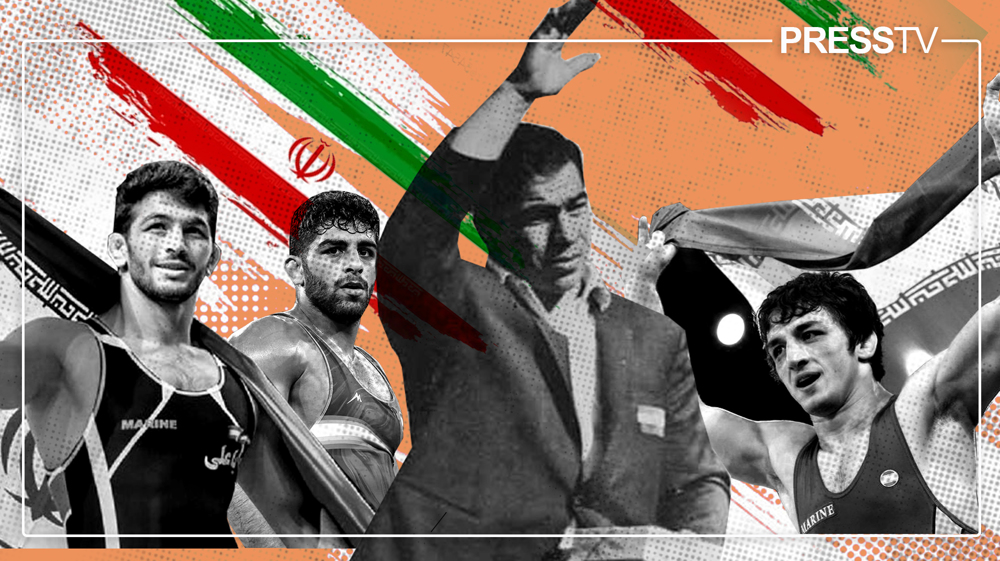
In October 2021, in the gold-medal bout of the World Wrestling Championships in Oslo, a nation of 90 million held its breath as Iran’s most celebrated freestyle wrestler, Hassan Yazdani, stepped onto the mat to face his fiercest rival, David Taylor of the United States.
Just two months earlier, Yazdani, who hails from Jauybar, a small town in northern Iran’s Mazandaran province known as the cradle of Iranian wrestling, had suffered a devastating defeat at the Tokyo Olympics, where Taylor snatched gold in the 86kg final.
The loss reverberated across Iran, where wrestling is more than a sport. In Oslo, the wrestling-loving nation wanted redemption. They wanted their hero to make a statement. And he delivered.
With a commanding 6-2 victory, he turned heartbreak into triumph. The win wasn’t just personal; it was a national celebration watched live by millions back home.
Wrestling in Mazandaran alone has produced over 20 world and Olympic champions over the decades, giving the town the nickname “the city of champions.” Yazdani is just one of them.
He is loved and admired with the same fervor Argentinians reserve for Lionel Messi, Indians for Sachin Tendulkar, Jamaicans for Usain Bolt and the Swiss for Roger Federer.
His achievements speak for themselves: three-time world champion (2017, 2019, 2021), Olympic gold medalist (2016 Rio), and three-time Asian champion – making him one of the greatest freestyle wrestlers of his era.
But his greatness isn’t measured only in medals. It’s in the way he carries the weight of a proud wrestling-loving nation, and the legacy of generations before him.
Feature | Iranian wrestlers stamped their authority at the Paris Olympics, grabbing 8 medals in Greco-Roman and freestyle divisions - most in any Olympics.#Paris2024 https://t.co/QeqcBQgwRL
— Press TV Sports (@presstvsports) August 14, 2024
From zoorkhaneh to the world stage
In Iran, wrestling – known locally as koshti – is not just a competitive sport. It’s a sacred ritual. Rooted in varzesh-e bastani, a traditional form of athleticism practiced in zoorkhaneh or “houses of strength,” wrestling combines physical prowess with moral virtue.
Wrestlers, or pahlavans, are expected to be paragons of strength, humility, and generosity. In fact, the word pahlavan means both “champion” and “hero.” It’s a philosophy that the likes of Yazdani have come to embody, which is reflected on the wrestling mat as well.
Iran’s wrestling journey spans centuries, according to historical accounts, but its modern chapter began in 1921 with the opening of the first wrestling club in the capital, Tehran.
By the late 1930s, the country began embracing modern and international styles of wrestling while retaining the traditions associated with it. In 1938, Masoud Pahlavan-Neshan introduced freestyle and Greco-Roman wrestling in Isfahan, setting the stage for Iran’s global ascent.
The first national freestyle competition was held in 1939 at Tehran’s Amjadieh Sports Club. But progress was interrupted during the early stages of World War II, when Iran was occupied by Russian and British forces. Wrestling, like much of life, came to a grinding halt.
‼️INFOGRAPHIC: From Takhti to Yazdani, Iran’s storied wrestling legacy has produced generations of Olympic and world champions, cementing its status as a global powerhouse.
— Press TV 🔻 (@PressTV) August 27, 2025
Follow https://t.co/B3zXG73Jym pic.twitter.com/Kk2MPCGXEQ
Iran’s early triumphs
After the war, the sport bounced back. In 1947, Turkey became the first international team to compete in Iran. A year later, Iran made its Olympic debut at the 1948 London Games.
Coached by Turkish trainer Saeem Erikan, the team included Mansour Raeisi, Hassan Saadian, Abbas Zandi, and others. Though they didn’t have podium finishes, the experience was enriching for the Iranian squad.
Iran’s first appearance at the World Freestyle Wrestling Championships came in 1951 in Helsinki. The team, again coached by Erikan, opened its account with two silver medals, thanks to Gholamreza Takhti and Mahmoud Mollaghasemi, and two bronze medals from Mohammad-Mehdi Yaghoubi and Abdollah Mojtabavi.
Iran ended its first world championship campaign with an impressive fourth-place finish, behind Turkey, Sweden, and Finland, which was a remarkable achievement.
The 1952 Helsinki Olympics marked Iranian wrestling’s second Olympic appearance. The team, still under Erikan’s guidance, included Takhti, Mollaghasemi, Yaghoubi, and others.
Nasser Giavachchi won Iran’s first Olympic wrestling medal – a silver – while Tofigh Jahanbakhsh secured a bronze. Iran finished third overall, missing the championship title by just two points. It marked a giant leap for the team.
The 1956 Melbourne Olympics became a defining moment in Iranian wrestling history. The team, led by coach Habibollah Bloor, won two gold and two silver medals.
Emam-Ali Habibi, a rising star at the time who passed away earlier this week aged 94, won Iran’s first-ever Olympic gold after defeating formidable wrestlers from Sweden, Russia, and Japan. Takhti also clinched gold, cementing his status as an international wrestling icon.
Silver medals went to Mohammad-Ali Khoshestehpour and Mohammad-Mehdi Yaghoubi. Iran finished third, behind the Soviet Union and Turkey.
🇮🇷🤼♂️ Yusefi, gold medalist in 79kg freestyle at World Junior Wrestling Championships, dedicates his victory to the Iranian people.
— Press TV Sports (@presstvsports) August 21, 2025
“I fight everywhere to raise our flag and bring joy to my nation.” 💪@presstvsports pic.twitter.com/t4EPz6efgl
Legends who paved the way
Iran’s wrestling history has been shaped by a lineage of icons whose achievements not only put the country on the global wrestling map but also inspired future generations of wrestlers.
It began with Gholamreza Takhti, revered not only for his athletic prowess – Olympic gold in 1956, silver in 1960, and three world titles – but also for his humility and strong character, earning him the enduring title of “World Pahlavan.”
Emamali Habibi, the nation’s first Olympic gold medalist, who also claimed three World Championship titles between 1959 and 1962, carried the torch forward.
In the years that followed, Abdollah Movahed dominated the freestyle wrestling scene from 1965 to 1970, winning five world championships and an Olympic gold in 1968.
Rasoul Khadem led the caravan into the 1990s, winning back-to-back world titles in 1994 and 1995 before securing Olympic gold in Atlanta in 1996.
In Greco-Roman wrestling, Hamid Sourian emerged as a powerhouse, grabbing six world titles and an Olympic gold in 2012, and cementing himself as one of the most decorated wrestlers in Greco-Roman history.
Today, Yazdani stands at the summit of this storied tradition. With multiple world titles and Olympic medals to his name, his dominance has placed him among the greatest wrestlers of all time. His sheer dominance on the mat has earned his respect of many of his contemporaries.
🇮🇷🤼♂️ Yazdani eyes return to mat in 2026
— Press TV Sports (@presstvsports) August 18, 2025
Hassan Yazdani, captain of Iran’s wrestling team, says he will miss the 2025 World Wrestling Championships but is determined to compete in the 2026 edition of the competition.@presstvsports pic.twitter.com/mfrh6lEUX5
Iran-US rivalry on the wrestling mat
Few rivalries in world wrestling are considered as high-voltage as the one between Iran and the US. This rivalry has played out for decades in pure athletic combat, away from politics.
The seeds were sown in the 1950s and 60s, when Iran’s national hero Takhti faced American champions like Dan Hodge. Their clashes were marked not just by skill, but also by mutual respect, laying the foundation for a rivalry that would endure across generations.
By the 1990s, the duel intensified. Iran’s Khadem, a legend at 90kg, battled America’s Kevin Jackson and John Smith, both Olympic champions. Their matches drew massive audiences.
In more recent years, the rivalry found new life in the 86kg weight class, where Yazdani and Taylor became the faces of their nations’ hopes. Every bout between them is not just a contest of strength and technique, but a headline event that captures global attention.
Since their first senior clash at the 2017 World Championships in Paris, Taylor and Yazdani have faced each other multiple times, their duels described as “the greatest rivalry in modern freestyle wrestling” by the United World Wrestling, the international governing body for wrestling that oversees all international wrestling competitions worldwide.
The rivalry has also played out through other wrestling stars, such as Kamran Ghasempour and Jayden Cox, Rahman Amouzad and Zain Rutherford and others.
🇮🇷🤼♂️📖 The life story of Iran’s first Olympic gold medalist, wrestler Imamali Habibi, has been turned into a book named “Shadow of Walnut Trees."
— Press TV Sports (@presstvsports) August 20, 2025
The launch of the book was attended by veterans of Iran's wrestling.@presstvsports pic.twitter.com/g0QhGUyPH1
Iran's new-gen wrestling stars
In recent years, Iran has seen the rise of a formidable new generation of wrestling champions who have not only upheld the country’s proud legacy but elevated it to new heights.
From the Olympic mats of Tokyo and Paris to the World Championship podiums and Asian arenas, these athletes have showcased consistency, grit, and brilliance across both freestyle and Greco-Roman disciplines.
Amir Hossein Zare has emerged as a titan in the +125 kg freestyle division. After winning bronze at the Tokyo 2020 Olympics, he grabbed gold at the 2021 and 2023 World Championships and added a silver at the 2024 Paris Olympics, narrowly missing the top spot.
His blend of power and agility has made him one of the most feared heavyweights in the sport.
In the 65 kg class, Amouzad has dazzled with his dynamic style and relentless pace. He claimed gold at the 2022 World Championships and followed it up with a silver medal in Paris, establishing himself as one of the most exciting wrestlers to watch.
Ghasempour, nicknamed “The Gladiator,” has been nearly unbeatable in the 92 kg freestyle category. He won back-to-back World Championship golds in 2021 and 2022, defeating elite opponents like Cox, and remained undefeated in major tournaments through 2024.
Amir Ali Azarpira, another standout in the same weight class, transitioned from Asian dominance to global recognition, clinching a bronze medal at the 2024 Olympics thanks to his tactical maturity and explosive attacks.
Mohammad Nokhodi, competing in the 79 kg class, earned silver at the 2021 World Championships and continues to be a consistent performer, even though he missed the podium in Paris.
Iranian Greco-Roman wrestler Mohammad Reza Geraei wins Iran's first gold medal in the wrestling competition in the 2020 Olympic Games.#Olympics pic.twitter.com/uMZZQpx0if
— Press TV 🔻 (@PressTV) August 4, 2021
Iran’s Greco-Roman contingent has been equally impressive. Mohammadhadi Saravi has become a global icon in the 97 kg category, winning bronze in Tokyo, gold at the 2021 and 2023 World Championships, and Olympic gold in Paris 2024 by defeating longtime rival Artur Aleksanyan.
Mohammadreza Geraei, known as “The Iceman,” stunned the world with Olympic gold in Tokyo 2020, followed by World Championship gold in 2021 and bronze medals in 2022 and 2023. His explosive style and clutch performances have made him a national hero.
Joining this elite group is Saeid Esmaeili, who delivered one of Iran’s most thrilling performances at Paris Olympics, winning gold in the 67 kg Greco-Roman category with a dramatic 6–5 victory over Ukraine’s Parviz Nasibov.
Barzegari’s silver lifts Iran to five medals at 2026 World Poomsae Championships

Iran tops Asian Youth Karate Championships with 31-medal haul

Iran’s Rahimi wins gold at 2026 World Archery Para Series in India



Four Palestinians, including child, killed in Israeli attacks across Gaza
Iran retains initiative in Strait of Hormuz despite US claims: Armed Forces
Yemeni army targets sensitive sites in Saudi capital, Aramco facilities in Yanbu
Barzegari’s silver lifts Iran to five medals at 2026 World Poomsae Championships
VIDEO | Pakistan, China co-chair historic SCO bank framework talks
VIDEO | Press TV's news headlines
VIDEO | News Review: US accused of understating troop deaths in war on Iran
Trump’s ‘war of choice’ against Iran ‘a disaster’: House Democratic leader


 PressTV NEWSLETTER
now
PressTV NEWSLETTER
now
 This makes it easy to access the Press TV website
