Explainer: Iran’s largest solar power project takes off in Isfahan with Aftab Sharq plant
By Ivan Kesic
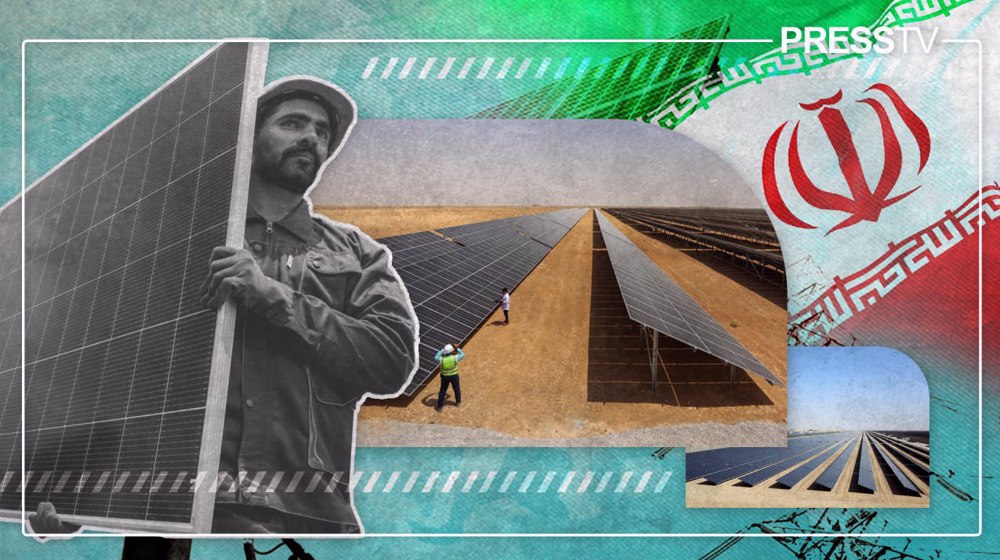
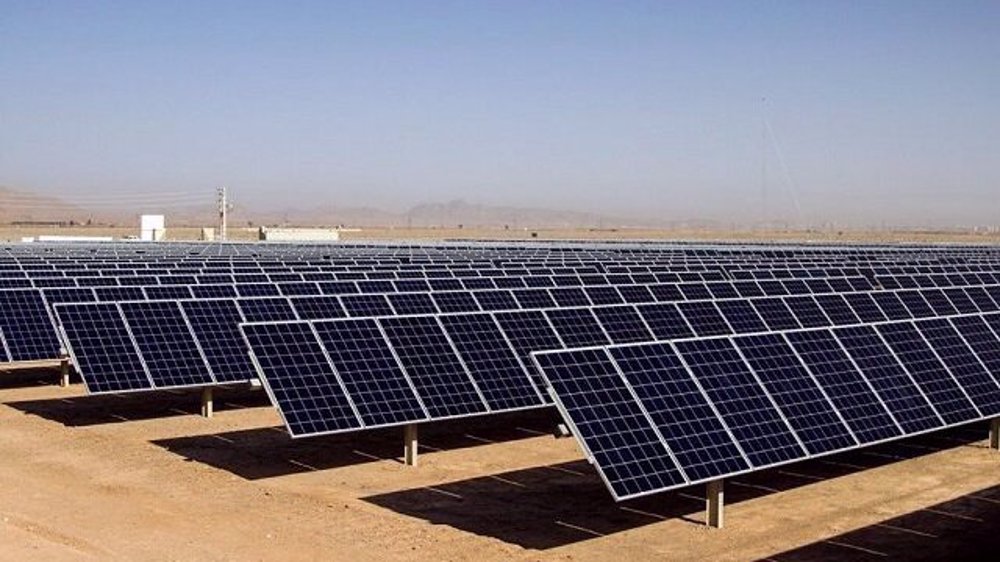
The recent opening of Iran's largest solar power plant, Aftab Sharq, in central Isfahan province, marks a significant milestone in the country’s pursuit of self-sufficient renewable energy technology.
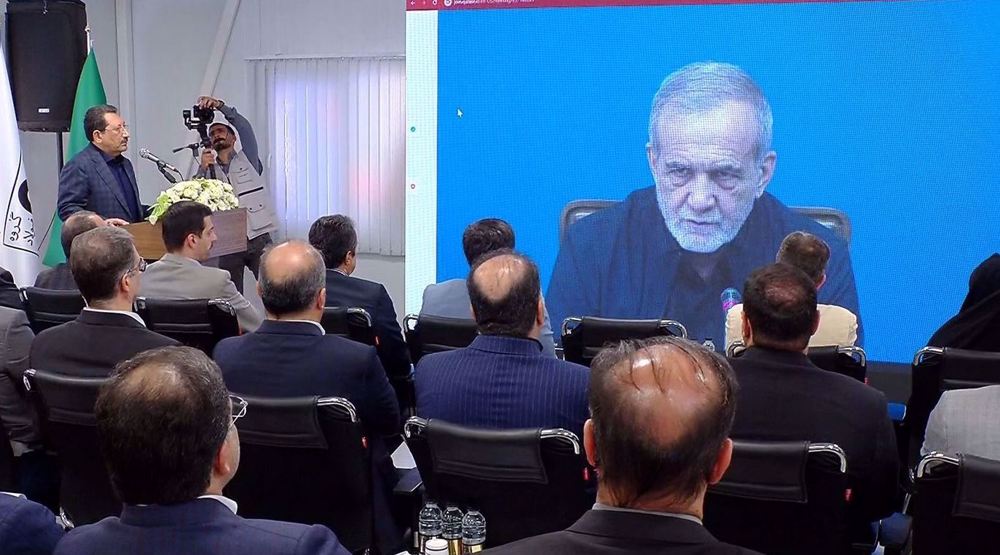
President Masoud Pezeshkian officially inaugurated the 120 MW Aftab Sharq facility in the presence of senior government ministers and provincial officials.
The €305 million project, developed by Mobarakeh Steel Company near Kuhpayeh, was launched remotely on July 10. The first phase, with a capacity of 120 MW, represents only one-fifth of the project’s planned final output.
In his address, Pezeshkian praised the collaborative efforts of investors, contractors, and government agencies, including the Ministries of Energy and Industry, Mines, and Trade.
He also paid tribute to the martyrs of the recent 12-day imposed war and framed the project as aligned with Leader of the Islamic Revolution Ayatollah Seyyed Ali Khamenei’s emphasis on investment and production for this Persian calendar year.
The impressive ceremony was attended, among others, by Interior Minister Mohammad Atabak, Isfahan Governor Mehdi Jamalinejad, lawmakers, and Mobarakeh Steel's CEO.
Jamalinejad highlighted Isfahan's renewable energy ambitions, noting that 7,560 MW in solar agreements have already been signed for the province, with a target of 5,300 MW operational capacity by 2028.
Iran’s new solar power plant setting regional clean energy benchmark @gisoumisha reports from Isfahan.
— Press TV 🔻 (@PressTV) August 5, 2025
Follow: https://t.co/mLGcUTSA3Q pic.twitter.com/wu11pFzNu4
Aftab Sharq solar power plant
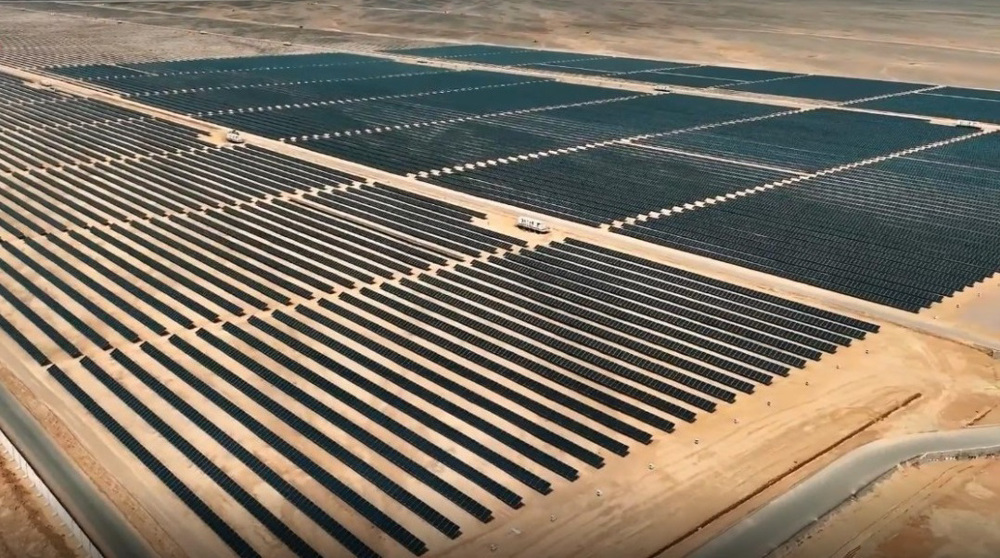
The Aftab Sharq, or Aftab Shargh (meaning “Sunlight of the East” in Persian), solar power plant is located 10 kilometers west of Kuhpayeh in Isfahan, a region known for its industrial and agricultural significance.
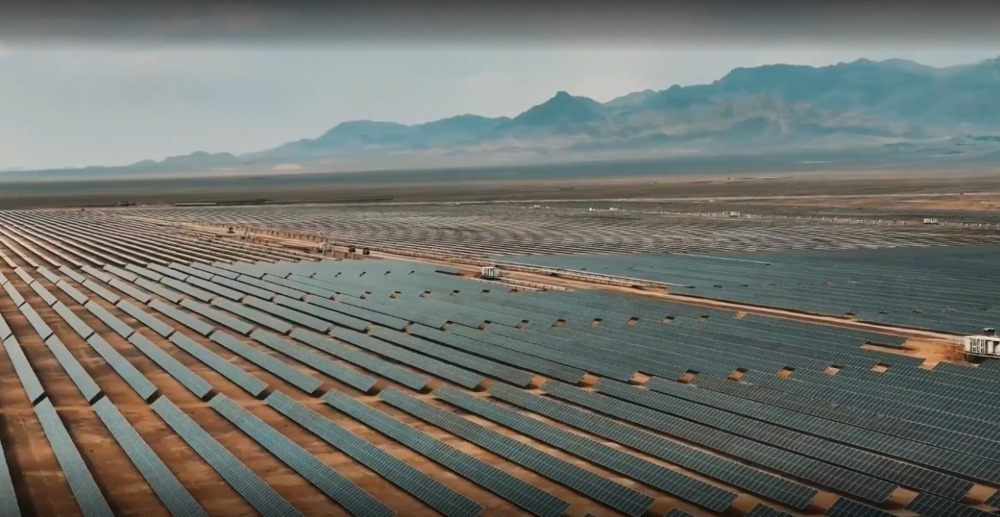
Situated 40 kilometers east of the city of Isfahan, the plant takes advantage of the province’s arid landscape, ideal for large-scale solar installations.
Covering 1,200 hectares in a rectangular layout – 4.2 kilometers long and 3 kilometers wide – the complex lies adjacent to State Road 62, near the historic Haj Hasan Caravanserai.
The first phase of the plant was inaugurated in July via video link by Iranian President Pezeshkian, marking a milestone in the country’s renewable energy ambitions.
The project is led by the Ministry of Industries and overseen by senior local officials, with the Renewable Energy Organization of Iran (SUNA) playing a key role in planning and execution.
Construction was carried out by MAPNA Group, a prominent Iranian conglomerate specializing in energy, engineering, and construction.
The initial 120 MW phase employs advanced photovoltaic (PV) technology, likely monocrystalline or polycrystalline modules optimized for Iran’s high solar irradiance of up to 5.5 kWh/m²/day.
Designed to expand to 600 MW by March 2027, Aftab Sharq will become Iran’s largest solar facility upon completion. The remaining 480 MW will be installed over the next 18 months in several phases, supported by government funding and private partnerships.
The plant forms part of a broader \$30 billion renewable energy program announced by Iran, with Aftab Sharq representing a significant share of Isfahan Province’s allocation.
Both construction and operation are expected to create hundreds of jobs, boosting the economy in one of Iran’s most industrialized regions.
Iran's solar industry development
The Aftab Sharq solar power plant supports Iran’s goal of reducing reliance on fossil fuels, which currently account for 97 percent of its energy mix, and achieving a projected 30,000 MW of renewable capacity by 2029.
Excess electricity from the plant could supply regional export markets, enhancing Iran’s geopolitical leverage amid the illegal sanctions imposed by the US and its Western allies.
However, international restrictions limit access to advanced solar technology and foreign investment, forcing Iran to depend on self-reliant solutions that also slow expansion.
Iran’s solar development began in the 1990s with small-scale projects, but growth accelerated in the 2000s due to rising energy demand and concerns over fossil fuel depletion.
The Sixth Development Plan (2016-2021) and subsequent policies set a renewable energy target of 5,000 MW by 2025, later expanded to 30,000 MW by 2029, with solar as a central pillar.
As of 2023, Iran’s total solar capacity was about 600 MW, with plans to raise this to 5,300 MW in Isfahan Province alone by 2029, nearly one-third of the national goal.
The Aftab Sharq plant is a cornerstone of this expansion. Isfahan currently leads the country with 240 MW in operation, set to grow by 470 MW by February 2026. Other high-potential provinces, such as Yazd and Fars, also host major projects.
The sector primarily relies on photovoltaic (PV) systems, with increasing adoption of grid-connected plants. Research into concentrated solar power (CSP) remains at an early stage but shows promise.
The Renewable Energy Organization of Iran (SUNA), under the Ministry of Energy, oversees development, offering feed-in tariffs modeled on Germany’s system and 20-year purchase guarantees.
Before the reinstatement of sanctions in 2018, foreign investors from Germany, South Korea, and India showed strong interest in Iran’s solar market.
Current projects now rely mainly on domestic capabilities, supplemented by partnerships with Chinese firms. Research into hybrid solar-wind systems and local panel manufacturing is also gaining momentum, supported by institutions such as Sharif University of Technology.
Iran benefits from 2,800-3,200 hours of sunshine annually, with solar irradiance levels that enable cost-effective power generation. This matches global trends, with PV costs having dropped 89% between 2010 and 2020.
With a population exceeding 90 million and an annual electricity demand increase of 5-7 percent, Iran’s 90,000 MW power grid is under strain. Cutting greenhouse gas emissions, currently around 600 million tons of CO₂ annually, is a stated priority, though extensive fossil fuel subsidies continue to challenge the energy transition.
Iran’s energy rebuild sparks unprecedented industrial shift
War spurs Iran’s push to develop Caspian energy frontier
Iran connects 290MW Dalahoo power unit to grid, showcasing elite F-class turbine technology



VIDEO | Police clash with far-right protesters in The Hague
How Iran turned US military and economic aggression into strategic leverage to dictate terms
‘No restraint’ against any aggression: Iran's top military command warns US, its regional allies
Poll: Over half of US Jews say Netanyahu fueling American anti-Semitism
Trump and Netanyahu will face same fate as Saddam Hussein: Top Iranian cmdr.
VIDEO | Protesters flood Buenos Aires in rally against Milei's economic policies
Iran claim basketball bronze at 2026 Asian Games, win delegation’s first medal
Yemen warns Saudi escalation will draw stronger response



 PressTV NEWSLETTER
now
PressTV NEWSLETTER
now
 This makes it easy to access the Press TV website
