Tsunami alerts triggered after 8.8-magnitude earthquake hits Russia’s east
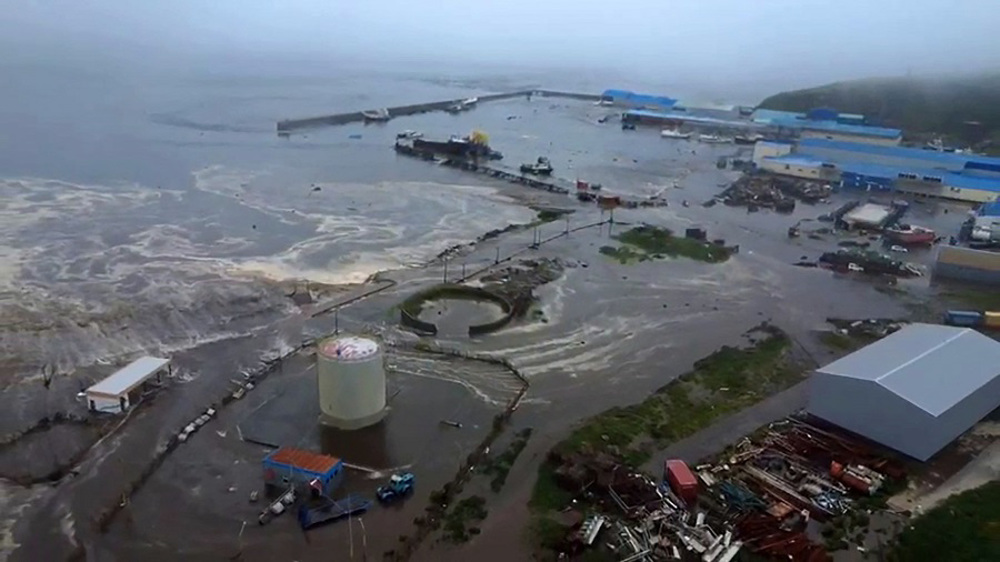
A powerful earthquake with a magnitude of 8.8 has hit off Russia’s far-east coast, triggering tsunami warnings in Hawaii, North and Central America, as well as Pacific islands stretching south towards New Zealand.
In the early hours of Wednesday, Russia’s far east experienced one of the most powerful earthquakes in the world, resulting in small tsunami waves in Japan and Alaska.
This seismic event also prompted warnings for Hawaii and certain areas of the US West Coast, causing concern for several other locations as well.
Official evacuation orders have been issued to people on the Pacific coast of Japan and in Hawaii.
In multiple locations, people were advised to move to higher ground due to the potential danger, which may persist for more than a day.
According to Dave Snider, the tsunami warning coordinator with the National Tsunami Warning Center in Alaska, waves less than a foot (under 30 centimeters) above tide levels were observed in the Alaskan communities of Amchitka and Adak.
Footage aired on Japan’s NHK public television showed white waves washing up to the shoreline on Japan’s Hokkaido in the north and Ibaraki and Chiba, just east of Tokyo.
The Japan Meteorological Agency reported a tsunami of 50 centimeters (1.6 feet) at the Ishinomaki port in northern Japan, which was the highest measurement recorded so far among several locations around northern Japan.
Shiji Kiyomoto, an earthquake and tsunami response official at JMA, stated that higher waves were still expected to arrive despite the already detected tsunami.
The Russian areas nearest the quake’s epicenter on the Kamchatka Peninsula reported damage from the earthquake and evacuations from the tsunami, but fortunately, no serious injuries were reported.
In Honolulu, the tsunami alerts coincided with the Tuesday afternoon rush-hour, leading to jammed streets and highways as warning sirens blared and people moved to higher ground. Hawaii schools also canceled after-school and evening activities.
The Pacific Tsunami Warning Center, located in Honolulu, issued a warning stating that the tsunami generated by the earthquake has the potential to cause damage along the coastlines of all the Hawaiian islands.
A tsunami advisory was issued for much of the West Coast, spanning from Canada’s British Columbia province to Washington state and California.
Authorities in New Zealand also issued warnings about the potential for ‘strong and unusual currents and unpredictable surges’ along all coastlines of the country.
Wednesday’s quake is considered to be the most powerful earthquake globally since the 9.0 magnitude earthquake off northeast Japan in March 2011, which resulted in a massive tsunami and nuclear power plant meltdowns.
The quake’s epicenter was about 119 kilometers (74 miles) east-southeast of the Russian city of Petropavlovsk-Kamchatsky, according to the United States Geological Survey (USGS).
Following the main quake, several aftershocks with magnitudes as high as 6.9 were recorded. The initial tsunami wave impacted the coastal area of Severo-Kurilsk, the principal settlement on Russia’s Kuril Islands in the Pacific, as confirmed by local governor Valery Limarenko, who assured the safety of residents staying on high ground until the threat of additional waves subsided.
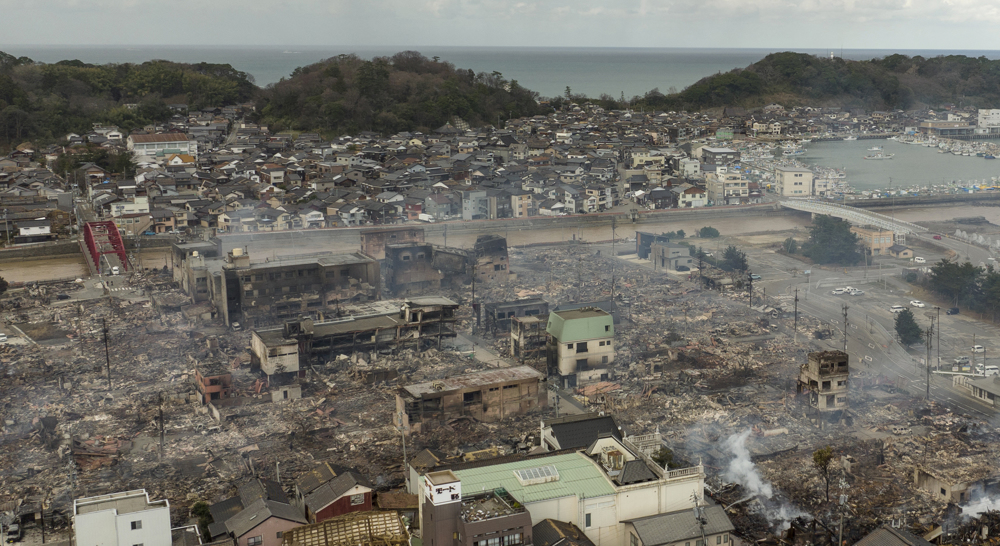
The earthquake caused structural damage in Petropavlovsk-Kamchatsky, with reports of swaying cars in the streets, power outages, and mobile phone service disruptions.
According to Russian news agencies citing the regional Health Ministry, several individuals sought medical assistance in Kamchatka after the earthquake, but no serious injuries were reported.
Russian Tu-95 strategic bomber crashes, 6 crew killed
At UN, Russia condemns US assassination of Iran’s Leader as ‘unacceptable’
IAEA inspectors cannot return to Iran amid US threats: Russia



Iraq’s long, dark night ends: 23 years of American lies, occupation, abuse end in humiliating ouster
VIDEO | Over 400 detained in student protests across France as public workers join strike
VIDEO | Press TV's news headlines
Iran will fire as many missiles as needed to deter enemy: IRGC advisor
From 1980s to 2026: The legacy of Sacred Defense and transformation of Iranian defense doctrine
UAE plane carrying Israelis lands in Saudi Arabia after pilots' brawl creates hijacking scare
US Senate blocks report on Israeli killing of nine Americans in West Bank
Israel continues Lebanon destruction, envoy expresses solidarity with Israeli ambassador



 PressTV NEWSLETTER
now
PressTV NEWSLETTER
now
 This makes it easy to access the Press TV website
