Explainer: Can E3 trigger ‘snapback’ sanctions against Iran – and what are Tehran’s options
By Hamid Javadi
European powers remained largely silent, and in Germany’s case, even openly supportive, when Israel and the United States launched military aggression against Iran, including attacks on nuclear facilities, effectively derailing diplomatic efforts between Tehran and Washington.
Now, they are preparing to take an equally detrimental measure of their own, which Tehran has warned will amount to military action against the country.
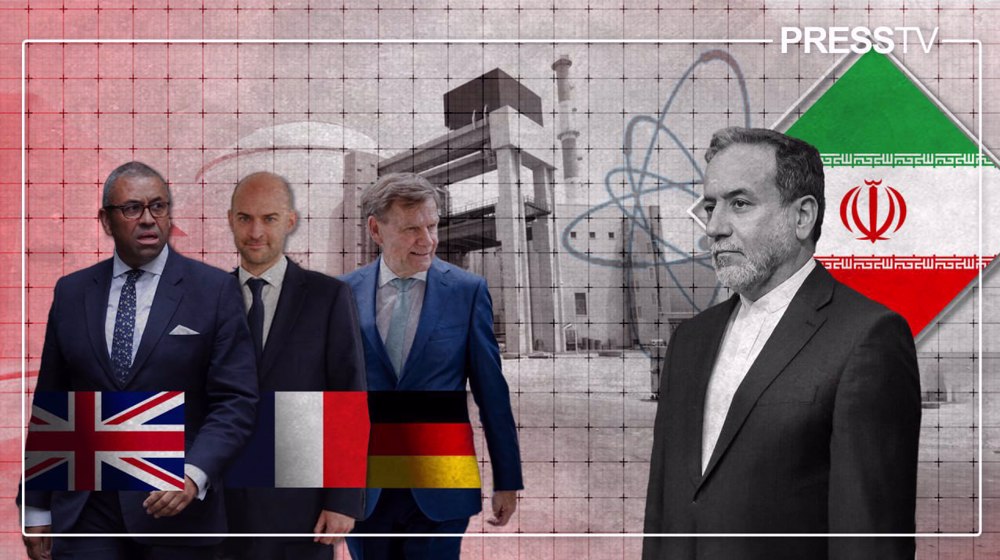
France, Britain, and Germany, the original signatories to the Joint Comprehensive Plan of Action (JCPOA), commonly known as the Iran nuclear deal, say they will invoke the “snapback mechanism” under the now largely defunct accord to bring back all UN sanctions against Iran by the end of August at the latest, if no tangible progress is made toward reaching a new agreement.
“Without a firm, tangible, and verifiable commitment from Iran, we will do so by the end of August at the latest,” French Foreign Minister Jean-Noel Barrot told reporters in Brussels on Tuesday.
Together known as E3, France, Britain, and Germany have a limited window of opportunity to trigger the snapback mechanism, as the deal will officially expire on October 18.
Tehran argues that the European troika lacks both “moral and legal authority” to trigger the dispute resolution mechanism under a deal they have repeatedly violated. It also warns that doing so would effectively end Europe’s engagement in Iran’s nuclear file.
Triggering the snapback will not automatically restore all UN Security Council sanctions against Iran, which were lifted in January 2016 when the JCPOA was implemented. It is a complicated, multi-step process that can take up to 65 days to complete.
Therefore, if they decide to go down that route, they will have to expedite the process before the window closes permanently, after which reimposing sanctions at the UN Security Council would be virtually impossible due to expected vetoes from Russia and China, two of Iran’s key allies who are also signatories to the JCPOA. (The deal’s dispute resolution mechanism does not allow any such vetoes.)
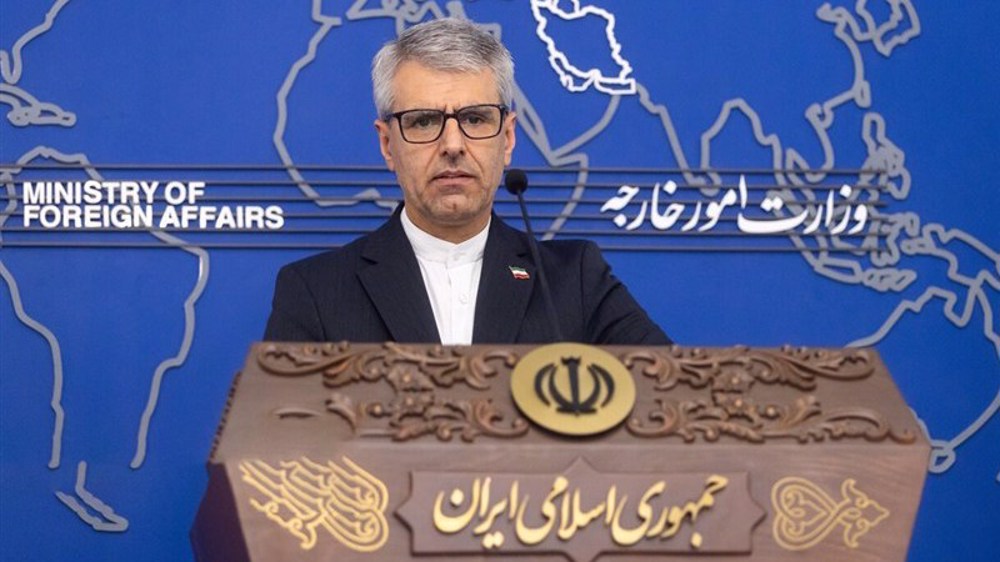
Iranian Foreign Ministry Spokesman Esmaeil Baghaei rejected the legitimacy of the so-called snapback mechanism, calling it a baseless political lever aimed at intensifying confrontation with Tehran.
— Press TV 🔻 (@PressTV) July 15, 2025
Follow: https://t.co/mLGcUTS2ei pic.twitter.com/cKOyPAZGTo
What is snapback and how can it be triggered?
The snapback mechanism was embedded in UN Security Council Resolution 2231, which endorsed the JCPOA. It allows any one party to the deal to trigger a process that restores all previous UN sanctions on Iran—which were lifted under the accord—if Iran is found to be in “significant” breach of its obligations.
The sanctions are wide in scope, ranging from international bans on arms transfers, nuclear equipment, and uranium enrichment to banking services and travel and asset freezes.
Here is how the dispute resolution process would play out: If any party to the JCPOA suspects another party is in “significant non-performance” of their commitments, they can refer the matter to a Joint Commission, which is comprised of Iran, Russia, China, Germany, France, Britain, and the European Union. The United States was a member before it withdrew from the deal in May 2018, and, as such, can no longer trigger the process.
The Joint Commission would then have 15 days to resolve the issue. If the issue remains unresolved, the commission can refer it to the foreign ministers of countries that signed the deal.
At this stage, the complaining party or the member accused of non-compliance has the option of asking an advisory board to look at the issue. The three-member board then has 15 days to deliver a non-binding opinion. The Joint Commission must then consider the advisory board's opinion to settle the dispute within five days.
If the party or parties that filed the complaint are not satisfied with the opinion, they could treat the “unresolved issue” as grounds to stop upholding their commitments under the JCPOA in whole or in part. They could also refer the matter to the UN Security Council, notifying it of the “non-performance” by the accused party. They should also demonstrate that the Joint Commission process has been exhausted in good faith.
Once notified, the Security Council must put the matter to a vote within 30 days. In Iran’s case, the Council must pass a resolution to continue sanctions relief, which the US, Britain, and France would most certainly veto.
Absent a resolution within 30 days, the sanctions imposed under all previous UN resolutions against Iran—which the JCPOA lifted—would “snap back” automatically.
The mechanism was designed in a way that no UN Security Council member can veto the measure at this point. That means Russia and China cannot object to the re-imposition of international sanctions against Iran.
Why is the E3 threatening to invoke the snapback?
At the core of all this is a report by the International Atomic Energy Agency (IAEA) early in June that criticized Iran’s “general lack of cooperation” with the agency and said the country had enriched enough uranium to 60 percent purity to make nine nuclear bombs if it chose to do so.
The IAEA’s Board of Governors used the report to declare Iran in breach of its non-proliferation obligations for the first time in two decades.
Invoking snapback mechanism will end Europe’s role in Iran’s nuclear issue: Araghchi https://t.co/JYg1w2tLzI
— Press TV 🔻 (@PressTV) July 12, 2025
Iran condemned the June 12 motion of censure—pushed by France, Britain, and Germany and endorsed by the US—as being politically motivated and a pressure tool to force the country to make concessions during negotiations with the US on a potential nuclear deal.
A day later, Israel struck Iran’s nuclear facilities and assassinated many of its top nuclear scientists in a surprise act of aggression on June 13.
The war of aggression—which the US later briefly joined by bombing three of Iran’s main nuclear sites—lasted for 12 days before they unilaterally declared a ceasefire on June 24, after Iranian ballistic missiles had brought life in Israel-occupied cities and towns to a halt and a major US airbase in Qatar was also targeted.
A report on the Axios website on Tuesday said US Secretary of State Marco Rubio had phone calls with his counterparts from France, Germany and the UK, and all of them agreed to set the end of August as a deadline for reaching a deal with Iran.
If no deal is reached by that time, the three European powers plan to trigger the "snapback" mechanism, the report stated.
What does Iran say and what are its options?
Iran has warned that it would give a “proportionate and appropriate response” if the snapback mechanism is triggered, including a possible withdrawal from the Nuclear Non-Proliferation Treaty (NPT).
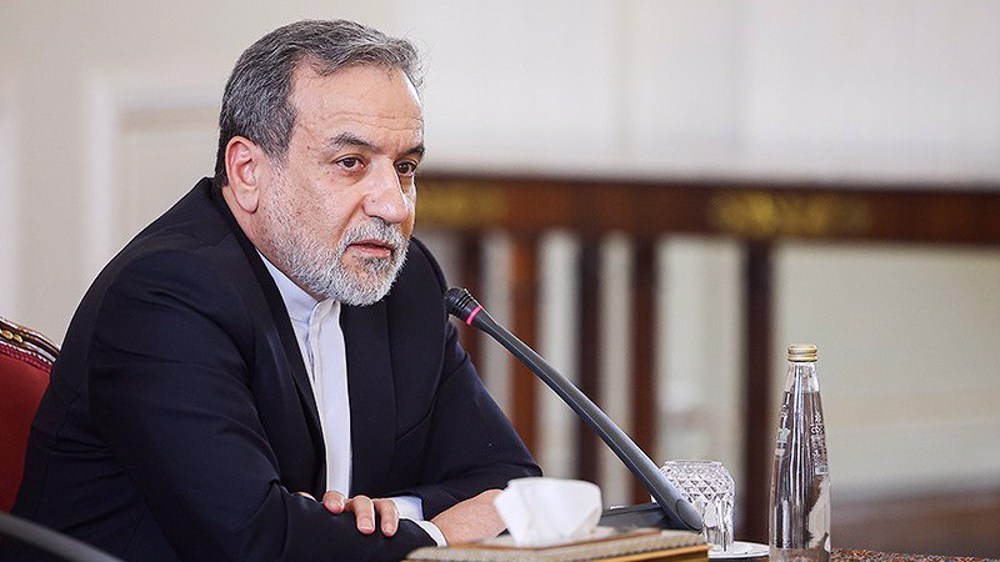
Foreign Minister Abbas Araghchi said that any snapback of UN sanctions would be the “biggest mistake” the Europeans could make—similar to the mistake the Americans made when they attacked Iran’s nuclear facilities—which he said has further “complicated” the nuclear issue.
He also warned that triggering the process “would signify the end of Europe’s role in the Iranian nuclear dossier.”
However, Araghchi said the window for diplomacy was still open, but any potential negotiations would strictly be limited to the nuclear issue and building confidence in the peaceful nature of Iran’s nuclear program in return for sanctions relief.
Experts say the lifting of sanctions, which have hit the economy badly, is the primary reason Tehran wants to make a deal with the US and European countries. Imposing more sanctions on Iran through the snapback mechanism would torpedo any prospect of a diplomatic resolution.
Iran warns Europe over snapback threat@gisoumisha reports from Tehran.
— Press TV 🔻 (@PressTV) July 13, 2025
Follow: https://t.co/mLGcUTS2ei pic.twitter.com/dtz8MoVFXm
Iran is still a member of the 2015 nuclear deal and maintains that it has scaled back some of its commitments in response to the grave violations by the US and the European signatories.
The remedial measures, Iran noted, have been legal and taken under Articles 26 and 36 of the JCPOA, which outline the mechanisms for addressing violations of the deal and allow a party to cease or reduce its commitments if another party is not implementing theirs.
Tehran accuses the US and E3 of turning the JCPOA’s dispute resolution mechanism on its head, as they were the parties that first violated the deal and left Iran with no choice but to exercise its rights under the agreement by ramping up its enrichment program and limiting access to its nuclear sites.
The US withdrawal from the JCPOA in 2018 and restoration of tough economic sanctions, experts say, was the most glaring example of “significant non-performance” by a party to the deal—an “unresolved issue” that gave Iran grounds to “cease performing its commitments.”
As with the European troika, Tehran argues that they lost their standing by failing to salvage the deal after the US exit, offering little in the way of trade and economic assurances to mitigate the impacts of the US withdrawal, but also rallied behind Washington’s “maximum pressure” campaign.
Iran sees that as a violation of the spirit of the deal, which had promised sanctions relief in return for restrictions on its nuclear program.
Foreign Ministry spokesman Esmail Baghaei said on Monday that activating the snapback mechanism was “a political move and in line with confrontation with Iran.”
Above all, Tehran accuses the E3 of siding with the aggressors—Israel and the US—when they bombed the Iranian nuclear sites. That makes them accomplices to the aggression and further strips them of any legitimacy to launch the snapback, which is a diplomatic process.
Should the E3 proceed, Iran could treat the move as a “hostile breach” of the JCPOA, allowing it to take countermeasures under Article X of the NPT, which permits withdrawal if a member’s “supreme interests” have been undermined.
That would effectively end the IAEA’s oversight of Iran’s nuclear program.
If such a scenario were to unfold, the US would face even more pressure from Israel and its powerful lobby in Washington to jointly launch another round of attacks on Iran’s nuclear facilities, sending the entire region down a spiral of escalation and uncertainty. That would be in no one’s interests, not least Europe.
While Iran’s Parliament passed a law to suspend cooperation with the UN nuclear watchdog in the wake of the attacks on its nuclear facilities, Tehran has made it clear that as a member of the NPT, it will continue to interact with the agency for now. That cooperation will take a “new form” and will be conducted through the Supreme National Security Council (SNSC).
‘Nuclear bomb in Israel, inspectors in Iran’: Pezeshkian slams glaring double standards at UNGA
Russia’s Rosatom increases workforce at Iran’s Bushehr Nuclear Plant
15 nations reject attacks, threats against safeguarded nuclear facilities



Araghchi: Iran ‘determined’ to defend national security, prevent US misuse of Hormuz
Debunked: Trump’s egregious UNGA claims on war against Iran crumble under scrutiny
VIDEO | News Review: Netanyahu faces UNGA walkout, protests in New York over Gaza
President Pezeshkian UN speech
Saudi Mufti urges troops to attack Yemen as Macron announces deployment in Yanbu
Turkey agrees to pull out of key base in north Iraq, occupy others
Two Israeli soldiers killed after drone explodes in northern Gaza
Over 100 arrested in protests against Netanyahu’s UN speech


 PressTV NEWSLETTER
now
PressTV NEWSLETTER
now
 This makes it easy to access the Press TV website
