JCPOA is dead: Ten years on, how US and its European allies killed the Iran nuclear deal
By Press TV Staff Writer
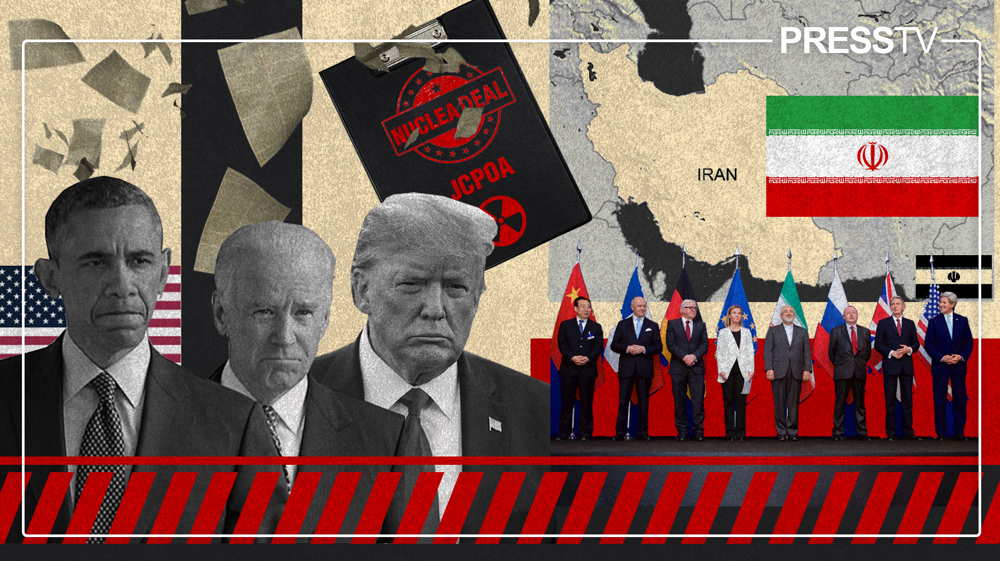
On this day in 2015, Iran and the world powers signed a landmark nuclear agreement known as the Joint Comprehensive Plan of Action (JCPOA), which imposed restrictions on Iran’s nuclear program in exchange for partial relief from international sanctions.
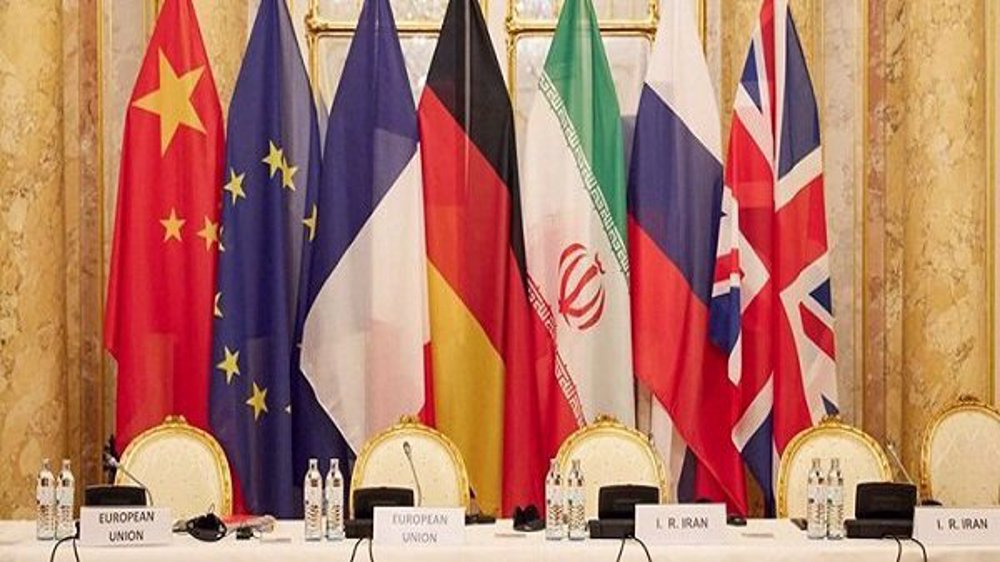
The final round of negotiations between Iran and the P5+1 (China, Russia, France, the UK, the US, plus Germany) and the European Union was held in Vienna, Austria, on July 14, 2015.
Key participants included Iran’s then-Foreign Minister Javad Zarif, US then-Secretary of State John Kerry, the EU’s then-High Representative Federica Mogherini, and other top diplomats.
The agreement, reached after two years of marathon talks, was aimed at limiting Iran’s nuclear program in return for the lifting of nuclear-related sanctions imposed by the UN, US, and EU.
Under the deal, Iran agreed to cap its uranium enrichment at 3.67 percent, reduce the number of centrifuges, and allow continued inspections by the International Atomic Energy Agency (IAEA).
In return, the JCPOA promised relief from major and cruel sanctions, which would have unfrozen billions of dollars in Iranian assets and allowed Tehran to sell oil on global markets.
The agreement included a “snapback” mechanism, allowing sanctions to be reimposed if Iran was found to be in violation of the terms of the deal.
In May 2018, then-US President Donald Trump unilaterally and illegally withdrew the US from the multilateral deal and reimposed sanctions under the so-called “maximum pressure” campaign.
📜 TODAY IN HISTORY | July 14, 2015
— Today In History (@TodayHistoryPTV) July 14, 2025
Iran and world powers finalized a landmark nuclear agreement (JCPOA) placing limits on Tehran’s uranium enrichment in exchange for the partial lifting of sanctions.
The deal was ultimately violated by US and Europeans failed to salvage it. pic.twitter.com/l8fE9ARTuf
Iran responded with strategic restraint, urging the European signatories to fulfill their end of the agreement. However, under American pressure, European countries failed to deliver on their commitments and instead toed the American line.
One year after the US withdrawal and European procrastination, Iran began gradually reducing its compliance, ramping up uranium enrichment while insisting that all measures were reversible if sanctions were lifted and other signatories returned to the deal.
Despite early promises, the Biden administration also failed to revive the JCPOA. Instead, it continued to pile on sanctions, effectively following Trump’s “maximum pressure” strategy, and allowing the agreement to slowly weaken and collapse.
Obama’s double-dealing
Signed in July 2015 during Obama’s tenure, the deal was initially celebrated as a diplomatic milestone. While Iran was honest and prompt in fulfilling its obligations, the US fell short of honoring its promises under the deal right from the outset.
Sanctions were due to be lifted on implementation day (January 16, 2016), after the IAEA verified Iran’s compliance. However, just a day later, the US Treasury introduced fresh sanctions against individuals and entities allegedly linked to Iran’s missile program, even though neither the JCPOA nor UN Security Council Resolution 2231 prohibited such missiles.
Throughout 2016, the Obama administration maintained a pressure strategy against Iran. For instance, Iran faced prolonged delays in acquiring commercial aircraft and had to issue a formal warning that it would trigger the JCPOA’s Dispute Resolution Mechanism (DRM) before even receiving limited permissions.
Out of the 117 Airbus planes ordered by Iran, only three were delivered. And none of the aircraft it ordered from Boeing were ever supplied.
British journalist @richimedhurst says that both Trump and Netanyahu took risks when the former ripped apart the JCPOA and the latter attacked Iran, and both ultimately failed.
— Press TV 🔻 (@PressTV) June 24, 2025
Follow: https://t.co/mLGcUTS2ei pic.twitter.com/GlU72Tn4hd
More significantly, in December 2016, the US Congress extended the Iran Sanctions Act (ISA) for another 10 years. Though Obama didn’t sign it, he also didn’t veto it, which allowed the legislation to take effect, an action Iran deemed a direct breach of the JCPOA and UNSCR 2231.
In retaliation, Tehran officially invoked the DRM, yet refrained from enacting any of the JCPOA’s prescribed remedial steps, again in order “to allow diplomacy to work.”
Clearly, even under Obama’s leadership, the US approach to the nuclear deal was riddled with delays, legal evasions, and politically motivated half-measures.
Although the JCPOA appeared to be a diplomatic success on paper, America’s inability to provide substantial economic benefits quickly revealed that it was an unreliable partner, even when diplomacy was supposedly thriving.
Trump’s ‘maximum pressure’ campaign
On May 8, 2018, Trump announced the US unilateral withdrawal from the nuclear deal in which Iran had willingly accepted specific restrictions on its nuclear program in exchange for sanctions relief.
Trump infamously branded the nuclear accord as “the worst deal in history” and vowed to secure a “better deal” that would also include the Islamic Republic’s ballistic missile program and regional activities, something that Iran has maintained are redlines for it.
By unilaterally leaving the deal, the US president launched what he called a “maximum pressure” strategy aimed at forcing Iran into renegotiating for a new deal.
The other parties to the agreement – Russia, China, Britain, France, and Germany – expressed regret at the US decision, but some of them failed to take concrete measures to walk the talk.
At the time, many saw Trump’s move as driven by disdain for his Democratic predecessor, Barack Obama, under whose administration the JCPOA was signed, while many saw it as a result of pressure from Israeli Prime Minister Benjamin Netanyahu and the Zionist lobby.
Whatever the underlying motivations — personal, political, or strategic — the undeniable fact remains: the US abandoned the deal, even as the UN nuclear agency repeatedly verified that Iran was fully complying with its nuclear obligations.
FM Araghchi says the E3 failed to implement their JCPOA commitments for seven years, warning of a strong response if they escalate confrontation over Tehran’s nuclear rights.
— Press TV 🔻 (@PressTV) June 12, 2025
Follow Press TV on Telegram: https://t.co/boCY50qfi9 pic.twitter.com/NwAgXIqgFU
IAEA had released 15 separate reports confirming that Iran adhered to the accord’s provisions, including curbs on uranium enrichment and reductions in nuclear stockpiles.
It verified that both Iran’s enriched uranium and heavy water reserves stayed within agreed limits, maintaining that Iran had neither breached those thresholds nor denied access to any requested inspection sites.
However, the scenario changed one year after the US exit, when Iran initiated “remedial measures” allowed by the deal itself in reaction to recurring violations by other signatories and the illegal US withdrawal.
Even after the US withdrawal, Iran signaled its commitment to diplomacy and exercised strategic patience, waiting to see if the remaining parties could act. It maintained its readiness to remain part of the agreement if the deal’s economic benefits could be preserved.
“If the JCPOA is to survive, the remaining JCPOA participants and other economic partners need to ensure that Iran is compensated unconditionally through appropriate national, regional and global measures,” Zarif wrote in a June 2018 letter to his counterparts.
Iran afforded the other parties a full year to act, but as their efforts faltered and pledges remained unkept and Washington intensified its economic pressure without achieving its stated objectives, Iran began a phased reduction of its nuclear commitments.
Biden follows
When Joe Biden assumed office in January 2021, he pledged to restore the JCPOA, marking a supposed shift from the Trump administration’s “maximum pressure” strategy. His administration advocated for negotiations with Iran to reinstate the nuclear agreement.
Initially, Iran held off on entering new talks, asserting that its remedial measures were legitimate responses to the US withdrawal, and affirming it would reverse those steps once Washington returned to the deal.
Iranian leaders insisted that restoring the agreement required no renegotiation; instead, they stressed that the responsibility lay with the US to rejoin the pact unconditionally and mend its ways.
But still, Iran once more embraced diplomacy and joined indirect negotiations with the US in Vienna starting in April 2021, aimed at bringing the US back into the JCPOA.
However, throughout the negotiations, the Biden administration echoed Trump-era demands, declaring its intent to “lengthen and strengthen” the original deal and to incorporate broader concerns, such as Iran’s missile capabilities.
.@haniehtarkian says that the European signatories to the JCPOA have proven that they do not have any independent foreign policy, as they have never fully implemented the deal.
— Highlights (@highlightsnews1) September 15, 2023
Follow Press TV on Telegram: https://t.co/7h1TYXZOQt pic.twitter.com/J6zhjhBCUp
Despite holding several rounds of indirect talks over more than a year, the process hit a deadlock as Washington prolonged the discussions, increased its demands, and continued enforcing Trump’s pressure campaign.
One major sticking point was the US refusal to commit to preventing another withdrawal from the deal, a central concern for Tehran after the 2018 exit under Trump.
In addition, Washington continued imposing sanctions outside the scope of the JCPOA, citing unrelated issues such as Iran’s regional influence and ballistic missile program as justification.
In August 2022, the European Union put forward a “final text” intended to revive the accord. Iran accepted the proposal. However, the US rejected it, ultimately bringing the “revival” initiative to a halt.
Trump’s Maximum Pressure 2.0?
Upon returning to the White House in early 2025, Trump swiftly reactivated his “maximum pressure” campaign against Iran and piled up more sanctions.
On February 4, he signed a National Security Presidential Memorandum instructing the Treasury and State Departments to escalate sanctions, once again aiming to reduce Iran’s oil exports to zero and dismantle its missile program and regional influence.
In a move that highlighted the contradictions of US policy, Trump sent a letter to the Leader of the Islamic Revolution, Ayatollah Seyyed Ali Khamenei, expressing interest in reaching a deal, while simultaneously warning of military action if no agreement was achieved.
The gesture was widely interpreted in Tehran as another effort to project diplomatic intent while tightening sanctions and issuing threats – a failed policy.
Despite renewed pressure, Iran stood firm. President Masoud Pezeshkian stated that while Iran remains open to dialogue, it refuses to negotiate “at any cost.” Foreign Minister Abbas Araghchi echoed that sentiment, underscoring that Tehran welcomes talks, but not under pressure.
In his February 7 speech, Ayatollah Khamenei recalled that the JCPOA, the result of two years of strenuous negotiations, was unilaterally abandoned during Trump’s first term. He concluded that negotiating with such an administration is “not wise, smart and honorable.”
Foreign Minister Abbas Araghchi says Iran's talks in Oman on Saturday are an opportunity to test the seriousness of the United States which has a record of dealing in bad faith.
— Press TV 🔻 (@PressTV) April 9, 2025
Read more: https://t.co/gZfrdvV7RB pic.twitter.com/2zfcKMx33L
“We negotiated, we gave concessions, and we made compromises, but we didn’t attain the intended result,” he said, referencing the 2015 agreement.
“Well, this was something we experienced after all. We must learn from this experience.”
Despite deep mistrust, Iran gave the US and the international community another chance to demonstrate their sincerity by entering indirect talks mediated by the Omani government.
The first five rounds of negotiations failed to yield any breakthrough, as the American side continued to engage in deliberate procrastination driven by ulterior motives.
Just two days before the sixth round of talks in Muscat, the Israeli regime launched an unprovoked act of aggression against Iran with the backing of the US.
It confirmed that the negotiations were merely a smokescreen used to buy time for the Israeli regime to plan and carry out a terrorist attack against the Islamic Republic.
Grand Ayatollah Shobeiri Zanjani passes away at age of 98
Iran must fight US blockade with energy blockade: Deputy speaker
Iran’s president to attend UN General Assembly in New York



US visa ban on Iranian president’s media team is bid to hide the truth: FM spokesman
US aggression, economic warfare amount to crimes against humanity: Iran's UN envoy
Protests erupt in US as ICE agent shoots Venezuelan driver
US pressure fuels cooperation among Muslim states: Pezeshkian
Major TV networks suspend White House pool coverage after Trump ban
US visa ban on Palestinian UN delegation violates international agreements: Hamas
VIDEO | Press TV's news headlines
Iran calls on France to respect law after suspending French cultural institute in Tehran


 PressTV NEWSLETTER
now
PressTV NEWSLETTER
now
 This makes it easy to access the Press TV website
