Pezeshkian’s visit to Baku heralds new order in South Caucasus
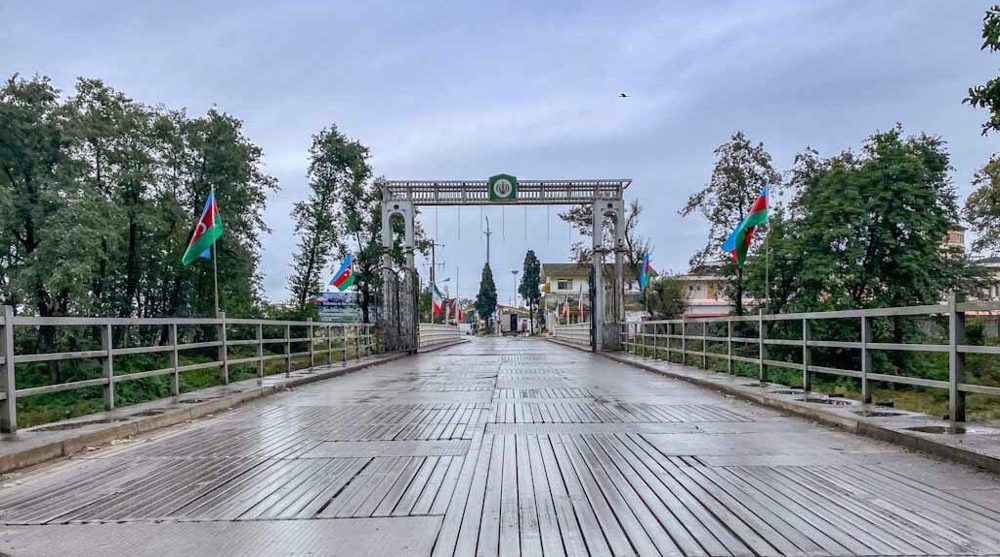
President Masoud Pezeshkian will head to Baku on Monday for an official visit at the invitation of his Azerbaijani counterpart Ilham Aliyev, opening a new chapter of expanding cooperation between two brotherly countries with deep historical ties.
The trip, taking place in line with Iran’s efforts in recent years to revive relations between the two countries, is by far the most important hallmark of the Pezeshkian administration’s neighborhood policy.
Iran’s neighborhood policy, a legacy of late President Ebrahim Raeisi, is motivated by the overarching objective of creating a new regional order where countries make sovereign choices in their partnerships, rather than aligning with any one major power.
Efforts at improving Iran’s relations with its neighbors are not new, having featured prominently in the administrations of former presidents. However, it was during President Raeisi that Iran adopted the good neighbor policy as a formal doctrine.
This deliberate pursuit of good relations with neighboring states bore significant results, most importantly with Saudi Arabia which is key to relations with the rest of the Arab world, given its financial prowess and stature as the custodian of the birthplace of Islam.
On a poignant note, President Raeisi’s last moments were the highlight of his staunch dedication to the new proactive doctrine of good neighborly relations, and his complementary “Look East” policy.
The former president was killed in May 2024 after inaugurating two joint dams and a joint hydroelectric power project with Azerbaijan on the Aras river.
He was joined at the ceremony by President Aliyev, who said he had bid a “friendly farewell” before the helicopter Raeisi and seven other people were travelling in departed the dam area and crashed in a mountainous region amid poor weather conditions on the way to the city of Tabriz.
The visit by Pezeshkian, ethnically an Iranian Azerbaijani on both paternal and maternal lines, to Baku comes after his high-profile trips to Turkmenistan and Tajikistan, and previously Iraq, reflecting his administration’s commitment to the new architecture in regional and neighborhood relations.
Under this policy, the Islamic Republic has always adhered to the principle of advancing its relations with its neighbors based on common interests and free from influence from third parties.
As regards Azerbaijan, Iran’s foreign policy is anchored by the principles of rationality, respect for the territorial integrity of the former Soviet nation, and support for lasting peace in the South Caucasus - a fault zone between East and West.
After the Soviet Union’s collapse, Iran recognized Azerbaijan's independence in 1991, and was among the first countries to establish diplomatic relations and open its embassy in Baku.
Diplomatic relations have run hot and cold for years, but they have always enjoyed a rich foundation of historical and cultural commonalities. In addition to geographical proximity, Iran and Azerbaijan have deep kinship affinities, which transcend official relations between governments.
Pezhakian's visit to Baku is a strong underpinning of the fact that the two neighbors, with long borders and historical kinship, are bound to set their relationship on a more stable, predictable and constructive trajectory with consistent reinforcement and high-level engagement.
It is taking place at a time when the specter of a thirty-year war between Azerbaijan and Armenia over the Karabakh region has been lifted, and the two neighbors have agreed the text of a peace agreement to end nearly four decades of conflict.
Peace and security in the South Caucasus, which has always been supported by Iran, can facilitate economic cooperation between Iran and Azerbaijan and enable the development of strategic relations.
Tehran and Baku can secure their economic interests by applying pragmatic approaches, in the light of positive synergy based on abundant commonalities and in an atmosphere of mutual trust.
The South Caucasus has been gaining strategic importance on the global arena and benefiting from shifting geopolitical dynamics in the region. The war in Ukraine has boosted the region’s strategic value, particularly with the expanding corridors linking Asia and Europe.
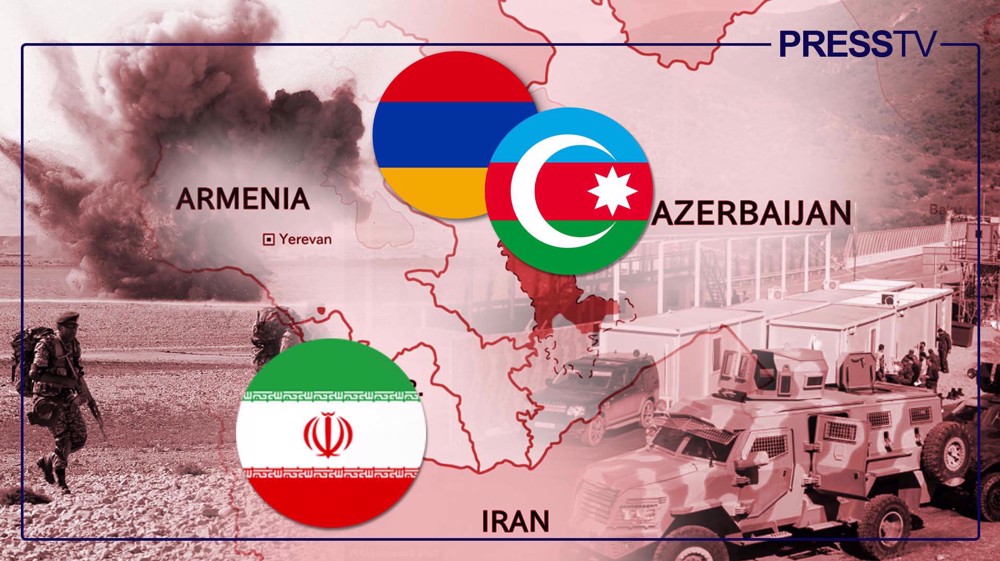
Rival transit corridor projects have been broached to serve as hubs for international trade integration, regional stability, and economic progress in addition to being routes for transit.
These corridors offer the shortest overland connection between Europe and China, Eurasia’s two largest economies, as an alternative to the traditional route.
In October 2023, Tehran and Baku agreed to establish a transit route called the Aras Corridor, which allows Azerbaijan to access its Nakhchivan exclave through Iranian territory.
Bypassing Armenia, the Aras Corridor presents an alternative to the Zangezur Corridor with the potential of reducing Iran’s concerns for its common border with Armenia.
The corridor also aligns with the International North-South Transportation Corridor (INSTC), enhancing regional connectivity and trade routes between Iran and Russia.
Azerbaijan serves as a major transit route in the sprawling INSTC, a network of roads, railways, and shipping routes, linking the Baltic Sea to the Persian Gulf and connecting Azerbaijan, Russia, India, Iran, and other countries.
The Rasht-Astara railway is the crucial and only missing component of the INSTC along the western coast of the Caspian Sea. In January, Pezeshkian and Russian President Vladimir Putin agreed in the Kremlin to sign a trilateral agreement and start building the railroad by the end of March 2025.

The project is set to feature on Pezeshkian’s itinerary in Baku, along with removing customs barriers to increase trade, expanding tourism exchanges, exploiting a joint oil field in the Caspian Sea, and Iran’s participation in the reconstruction of Azerbaijani territories liberated in the Karabakh war with Armenia.
Overall, the Iranian president's visit to Azerbaijan is an important opportunity and a calculated step toward strengthening bilateral and multilateral relations and exploiting the shared capacities of the two countries for peace, security, and sustainable development in the South Caucasus.
‘Banality of evil’: Iran slams EU’s rights concerns amid silence against US-Israeli war crimes
Iran determined to defend national interests, security: FM Araghchi
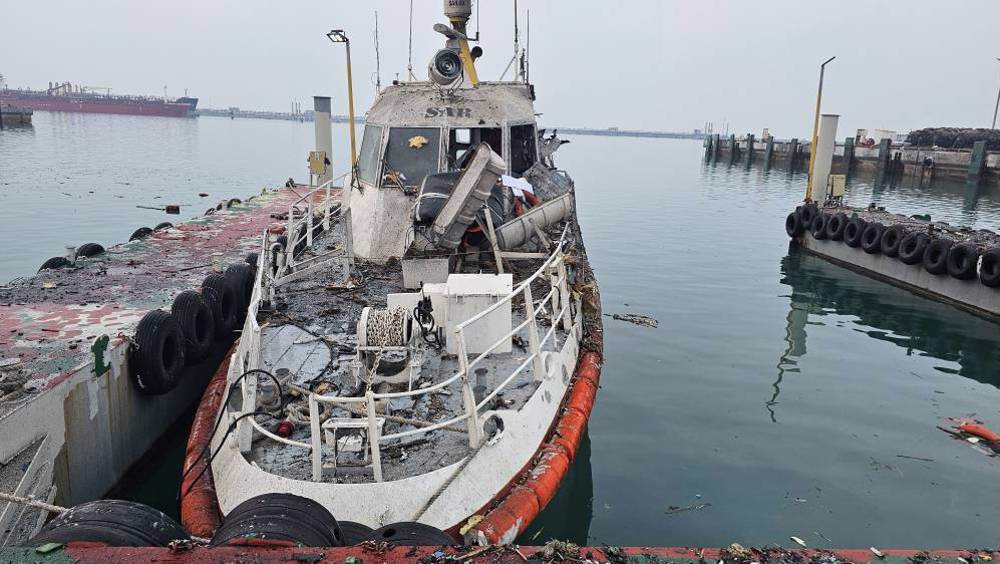
Iran: US attack on rescue vessels amounts to ‘war crime’



Mearsheimer: Russia’s victory against Ukraine guaranteed:
VIDEO | Lebanon's drone fightback
‘Banality of evil’: Iran slams EU’s rights concerns amid silence against US-Israeli war crimes
Israel shifts from AIPAC-style lobbying to foreign agents to expand US influence: Report
Explainer: Which Persian Gulf power plants fueling US war machine are in Iran’s crosshairs
VIDEO | The Iranian navy shatters US naval supremacy
UN rapporteur slams Israeli settler attacks in West Bank, demands accountability
Trump threatens EU with ‘very big price’ for fining Google


 PressTV NEWSLETTER
now
PressTV NEWSLETTER
now
 This makes it easy to access the Press TV website
