

By Press TV Website Staff
A wave of medical advances and healthcare initiatives has marked recent months in Iran, offering new hope to patients while strengthening the country’s healthcare system.
From free heart transplants and cancer treatments in public hospitals to homegrown cancer-fighting technologies, advanced stem cell therapies, an expanding domestic pharmaceutical industry, and AI-powered emergency care, these developments reflect progress across multiple areas of healthcare.
Beyond individual medical breakthroughs, many of these initiatives aim to make essential healthcare services more accessible and affordable, particularly for patients facing serious or life-threatening conditions.
Expanded insurance coverage, lower treatment costs, and increased support for vulnerable patient groups are among the measures designed to ease the financial burden of medical care.
Meanwhile, advances in medical research and biotechnology, alongside the development of locally produced medical technologies, underscore the growing role of domestic expertise in tackling complex healthcare challenges.
Together, these efforts reflect a healthcare sector working to strengthen its scientific capabilities while expanding access to quality medical services for patients across the country.
Here are some of the key milestones.
Heart transplants and cancer treatment become free
In a major step toward improving access to life-saving healthcare, Iran’s Health Insurance Supreme Council announced in mid-October that basic health insurance would fully cover heart transplants, making the costly procedure free for patients nationwide.
According to Mohammad Raeiszadeh, head of the Iranian Medical Council, nearly 2,000 patients are currently on the waiting list for heart transplants. He described the decision as a positive step toward supporting patients in need of the procedure.
✍️ Iran First -Iran emerges as West Asia's organ transplant hub, turning adversity into hope for thousands
— Press TV 🔻 (@PressTV) May 25, 2026
By Mina Mosallanejadhttps://t.co/lhpQsFtN1a
The move comes alongside expanded financial support for cancer patients.
Last week, the head of the Tehran Province Health Insurance Department announced that public hospitals provide chemotherapy and radiotherapy services free of charge to cancer patients through the Special and Intractable Diseases Fund.
Eligible patients can also receive financial assistance of up to 1 billion rials (100 million tomans) for treatment expenses not covered by the fund, subject to approval by the relevant committee.
A portion of treatment costs at private centers is also reimbursed under existing regulations.
Home nursing services set to receive insurance coverage
Home-based nursing and care services are also moving closer to being covered by health insurance, with a pilot program scheduled to launch in Tehran for the first time.
The initiative is expected to reduce healthcare costs for families while easing pressure on hospitals by allowing patients who no longer require hospitalization, but still need professional medical care, to continue their treatment at home.
Rahmatollah Memari, head of the Association of Nursing Services, announced the upcoming pilot program, noting that it could also encourage families to use licensed providers, improve oversight of service quality and help curb unauthorized home-care operations.
Iranian researchers develop homegrown cancer-fighting viruses
In August, Iranian researchers unveiled a domestic technology for designing, genetically engineering, producing and purifying oncolytic viruses — a promising new approach that uses viruses engineered to selectively multiply in and destroy cancer cells.
Developed by the National Cancer Research Institute of the Academic Center for Education, Culture and Research (ACECR), the project has established the country’s first homegrown technological platform in this field.
‼️ Iran has unveiled a homegrown technology for the design, genetic engineering, production and purification of oncolytic, cancer-killing viruses.#IranFirsthttps://t.co/GpocV06wHp
— Iran First (@IranFirst_PTV) August 10, 2026
The first product developed through the initiative has successfully passed laboratory and preclinical studies and entered clinical trials for the treatment of a hard-to-treat cancer, marking a significant step toward translating the technology into clinical applications.
Beyond the development of a single product, the platform provides the infrastructure needed to produce future generations of therapeutic viruses and other advanced treatments, including gene therapies.
It also represents an effort to reduce reliance on foreign technologies in one of the most sophisticated areas of medical biotechnology.
Pediatric stem cell transplants reach a milestone
In late September, Tehran’s Children’s Medical Center announced that it has performed more than 1,000 hematopoietic stem cell transplants in children, marking a major milestone in the treatment of serious childhood diseases.
The six-decade-old center, which launched its specialized stem cell transplantation unit in September 2016, provides advanced procedures for children with a wide range of conditions, including blood cancers such as leukemia, thalassemia, inherited immune deficiencies, and certain solid tumors.
Stem cell transplantation can offer a potentially life-saving option for children who do not respond to conventional treatments.
The achievement also highlights the broader development of pediatric cancer care in Iran.
Leading Iranian specialist in pediatric stem cell transplantation Amirali Hamidieh, who heads the Innovation Center for Stem Cell and Regenerative Medicine and the Pediatric Transplantation Department at Tehran’s Children’s Medical Center, received the World Health Organization’s Award for Cancer Control in the Eastern Mediterranean Region in October, recognizing his contributions to improving access to specialized cancer treatment.
Iran First - Iranian professor receives WHO award for advancing pediatric cancer carehttps://t.co/EwdJ0ge7xj
— PressTV Extra (@PresstvExtra) October 14, 2026
At the award ceremony, Hamidieh highlighted the establishment of Iran’s first pediatric hematopoietic stem cell transplantation center in 2007, a program that has since given more than 2,200 children a chance to survive.
He also pointed to the establishment of the region’s first unrelated stem cell donor registry in 2009 as an important step toward expanding access to transplantation.
Iran has also taken another step in pediatric cancer care with the opening of its first public university-affiliated center dedicated to the diagnosis and treatment of childhood cancers at Hakim Hospital.
Iran expands its radiopharmaceutical portfolio
Iran currently produces and regularly supplies 78 types of radiopharmaceuticals, with more than 20 additional products in the research and development pipeline, according to Mohammad Eslami, vice president and head of the Atomic Energy Organization of Iran.
Radiopharmaceuticals play an important role in nuclear medicine, both in diagnosing diseases and treating certain conditions, particularly cancer.
Iran also exports these products to 15 countries, generating approximately $70 million in revenue in 2025.
The country is also preparing to introduce AlphaZa, its first domestically developed alpha-emitting radiopharmaceutical, designed to target advanced cancers that have not responded to conventional treatments.
‼️Iran’s homegrown AlphaZa cancer radiopharmaceutical nears market launch: Nuclear chief
— Iran First (@IranFirst_PTV) June 17, 2026
🔹 Iran will soon introduce AlphaZa, country’s first locally produced alpha-emitting radiopharmaceutical for the treatment of advanced cancers.https://t.co/Y4cGjMpHI4#IranFirst pic.twitter.com/ffeAkTQH2M
Eslami stressed that domestic production continues uninterrupted, even under difficult circumstances.
“Radiopharmaceutical production never stops,” he said. “Even during wartime conditions, as well as on weekends, production continues. We are committed to ensuring that patients receive these medicines on time.”
Revived cyclotron strengthens domestic cancer care
In August, Iranian nuclear industry specialists announced they have restored a domestically operated cyclotron accelerator after nearly 16 years of inactivity, strengthening the country’s capacity to produce medical radioisotopes used in cancer diagnosis and treatment.
A cyclotron is a particle accelerator that produces radioisotopes for nuclear medicine. These materials are used in radiopharmaceuticals that help detect and monitor different types of cancer, including products such as FDG and F-PSMA.
The facility had remained out of operation for years due to technical problems, international sanctions, and the failure of the foreign company responsible for installing and commissioning the equipment to fulfill its obligations.
Iranian nuclear experts revive cyclotron to boost domestic cancer carehttps://t.co/hSpVPrAZbE
— PressTV Extra (@PresstvExtra) August 20, 2026
Iranian specialists eventually restored the system using domestically manufactured components.
Since its revival, the facility has remained operational and currently produces around 1,200 radiopharmaceutical doses per month.
According to Eslami, Iranian-made radiopharmaceuticals cost approximately one-tenth of their imported equivalents, helping reduce treatment expenses for patients and healthcare providers.
Iran plans to expand its cyclotron network to seven centers by March 2029, further increasing domestic production and reducing dependence on imports.
Iran among world’s top five in eye stem cell transplants
According to the head of the Iranian Ophthalmology Scientific Association, Iran is among the world’s five leading countries in stem cell transplantation for eye injuries, an advanced procedure used to treat severe damage to the ocular surface caused by chemical burns and heat.
Hamed Ghasemi said last week that the country has the expertise and equipment needed to perform these complex procedures without sending patients abroad.
The procedure involves transplanting stem cells to reconstruct damaged areas of the eye’s surface, helping restore the protective epithelial layer and improve vision.
Iran among world’s top five in eye stem cell transplants, says ophthalmology chief https://t.co/CEuXaTyRhg
— Press TV 🔻 (@PressTV) October 29, 2026
According to Ghasemi, the treatment is routinely performed at Tehran University of Medical Sciences and Farabi Eye Hospital.
Donor cells can be obtained from the patient’s unaffected eye, a close relative, or an eye bank. In some cases, specialists can also multiply a small number of available cells through laboratory culture.
The procedure is particularly important for patients whose injuries have damaged the stem cells responsible for maintaining the eye’s surface, potentially leading to severe vision impairment.
The treatment costs are covered by the government, and the procedure has a success rate of more than 85 percent, according to the information provided by the association.
Iran ranks among top 10 producers of biotech medicines
Iran has become one of the world’s top 10 countries in biotechnology-based pharmaceutical production, according to Mohammad Hashemi, spokesman for the country’s Food and Drug Administration.
More than 97 percent of the pharmaceutical products needed in the country, measured by the number of items, are now supplied by domestic manufacturers, Hashemi said in late September.
The figure has increased from approximately 95 percent in 2017 to nearly 97 percent in recent years, he added.
He noted that in terms of market value, domestic producers account for around 87 percent of Iran’s pharmaceutical market.
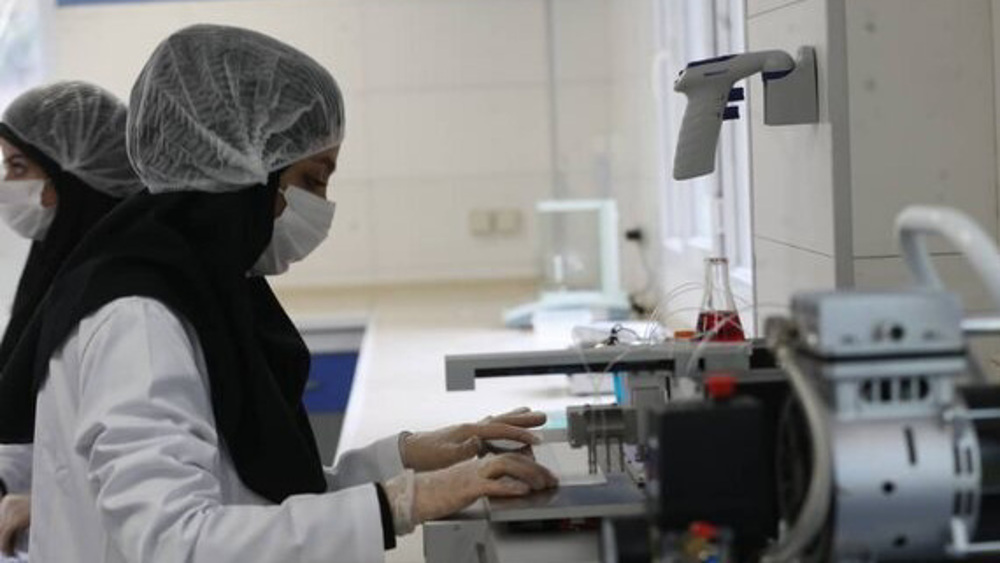
Hashemi attributed the progress to government policies supporting advanced technologies and knowledge-based pharmaceutical production, including streamlined licensing procedures, faster registration pathways for innovative medicines, preferential foreign currency allocation and financial support for strategic projects.
These measures have helped Iran develop dozens of biological medicines, join the group of recombinant drug producers and expand pharmaceutical exports to more than 40 countries, he highlighted.
Iranian osteoporosis drug wins EU market authorization
In June, Iranian pharmaceutical company CinnaGen announced that it had secured European Commission marketing authorization for its teriparatide medicine, Zandoriah, marking a significant milestone for the country’s pharmaceutical industry.
The drug is used to treat osteoporosis in eligible patients and is a biosimilar version of Forsteo, originally developed by US pharmaceutical company Eli Lilly. CinnaGen has previously marketed teriparatide in Iran under the brand name Cinopar.
💊 In a groundbreaking achievement for Iran's pharmaceutical industry, SinaGen received European Commission approval for its osteoporosis drug Zandoriah (teriparatide). The green light allows the company to market the drug across all 27 EU member states and three EEA countries. pic.twitter.com/q7azNRli3e
— Press TV 🔻 (@PressTV) June 2, 2026
The authorization followed an extensive scientific and regulatory assessment by the European Medicines Agency, including reviews of product quality, safety, efficacy, manufacturing standards and clinical data.
The European Commission’s final approval allows CinnaGen to market Zandoriah across all 27 EU member states, as well as Iceland, Liechtenstein and Norway.
The achievement also builds on the company’s earlier progress: in 2018, CinnaGen became the first Iranian pharmaceutical company to receive European Union Good Manufacturing Practice (GMP) certification.
AI-powered software helps save patients on the brink of death
An Iranian-developed artificial intelligence system at Sina Hospital in Tehran has helped save more than 10 patients suffering from ruptured abdominal aortic aneurysms over the past three months, according to a vascular surgeon involved in the project.
The condition involves the rupture of the body’s main abdominal artery, which can cause severe internal bleeding and carries an extremely high risk of death. In such emergencies, even a few minutes can make a critical difference.
Amin Shokri, a vascular surgeon at Sina Hospital, said the medical team had managed to localize a foreign software package originally priced at $15,000 for approximately $200, with the help of local specialists and the hospital’s AI team.

The software analyzes critical medical information from CT angiography scans in approximately 30 seconds, helping surgeons determine the precise size and location of the damaged artery and plan the procedure more quickly.
The technology supports minimally invasive endovascular surgery, in which doctors repair the damaged artery through small incisions in the groin rather than opening the abdomen.
“Over the past three months, we have operated on more than 10 patients with ruptured abdominal aortic aneurysms who were on the verge of certain death, using this software and the endovascular approach,” he said.
The minimally invasive technique can also significantly shorten recovery time, Shokri said. Patients without complications may be discharged after around two days, compared with seven to 10 days following conventional open surgery.
 This makes it easy to access the Press TV website